The Ulutas Medical Journal · ISSN 2149-0430 (print), 2149-388X (online) · https://www.ulutasmedicaljournal.com/?mno=195499
Case Report · Open access
A Case Report on SARS-CoV-2 Positive Neonate with Complex Heart Disease
Also available in: العربية · Türkçe · 中文
- Professor & Head(rtd),Dept. of Pediatrics & Dept of Neonatology,Chittagong Medical College,Chattogram,Bangladesh ROR
- Assistant Professor, Dept. of Neonatology, Chittagong Medical College, Chattogram ROR
- Junior consultant, Dept. of Neonatology, Chittagong Medical College Hospital,Chattogram ROR
- Associate Professor, Dept. of Neonatology, Chittagong Medical College,Chattogram ROR
- Biotechnologist, International Centre for Diarrheal Disease Research, Bangladesh (icddr,b), Mohakhali, Dhaka ROR
- Assistant registrar, Dept. of Neonatology, Chittagong Medical College Hospital,Chattogram ROR
- Medical officer, Dept. of Pediatrics, Chittagong Medical College Hospital,Chattogram. ROR
Abstract
In pediatric patients, Coronavirus disease-19 (COVID-19) presents usually without symptoms or with mild to moderate COVID-19. However, infants may present with more severe diseases, leading to even respiratory failure. COVID-19 may adversely affect the course of congenital heart disease (CHD) and vice versa in neonates and small infants. There is limited data about confirmed COVID-19 cases with CHD in neonates and early infancy. A newborn infant with confirmed COVID-19 was admitted to the Department of Neonatology of Chittagong Medical College Hospital. The case presented with C-Transposition of great arteries, superior-inferior ventricles, large upper muscular VSD with reverse shunt, large ASD with a left to right shunt, moderate right AV valve regurgitation (MR), and severe pulmonary hypertension. The newborn infant was isolated and was treated with antibiotics and cardiac drugs, along with supportive care. Ultimately, the infant deteriorated and expired. A newborn infant might be infected with COVID-19 even if a history of such infection in parents and caregivers is not found. Early identification of COVID-19 in neonates with CHD is essential for planning treatment, including limiting its transmission in the community.
Keywords
Full text
Introduction
Severe acute respiratory syndrome coronavirus (SARS-CoV-2), responsible for pandemic 2019 (COVID-19), goes on infecting more patients with worldwide mortality (1, 2). The virus was first identified in December 2019 in Wuhan, China. In Bangladesh, the first case of COVID-19 was detected in March 2020. Since then, cases have rapidly increased for the next six months, with a decreasing trend in afew months.The incidence has again increased rapidly recently. Although COVID-19 can affect all age groups, the disease is usually milder in children than in adults and may be accompaniedby nonspecific symptoms, especially in neonates (3). Data on the neonatal COVID-19 infection are scarce and even scarcer in association with congenital heart disease. PubMed search was carried out with the words 'Covid-19 with congenital heart disease in neonates', and 18 papers were identified; papers dealing with neonates alone were only 5 in number (4–9). Reports on neonatal COVID- 19 are unremarkable in Bangladesh (10). It is further less remarkable in connection with complex congenital heart disease. The case is presented to orient health personnel and other biomedical researchers, particularly on the probability of occurrence of COVID-19 in neonates with congenital heart disease. This may help prevent the transmission of COVID-19 in the community from such neonates through timely measures.
Case Presentation
A 12-day-old female baby patient presented to the Special Care Newborn Unit (SCANU) of Chittagong Medical College Hospital (CMCH) on 4th October 2020 with a history of respiratory distress and bluish discoloration of the body since birth. The newborn infant was delivered by lower uterine caesarean section at 38+ weeks of gestation with a birth weight of 2600 g in a maternity center. She breathed spontaneously, and resuscitation was not needed. However, as she had respiratory difficulty and cyanosis since birth, she required hospitalization. She was diagnosed with a case of complex congenital heart disease and was treated with oxygen support, intravenous fluid, and antibiotics. On the ninth day, she was shifted from Chattogram to Dhaka in a private health facility where a nasopharyngeal swab specimen for COVID-19 was collected from the newborn infant. The RT- PCR report of the specimen was positive, and she was referred back to CMCH. Her mother's antenatal period was uneventful. A history of risk factors of previous infection and contact with known COVID-19 patients was not found. Other family members were in good health. She had no history of fever, rhinorrhoea, and gastrointestinal symptoms.
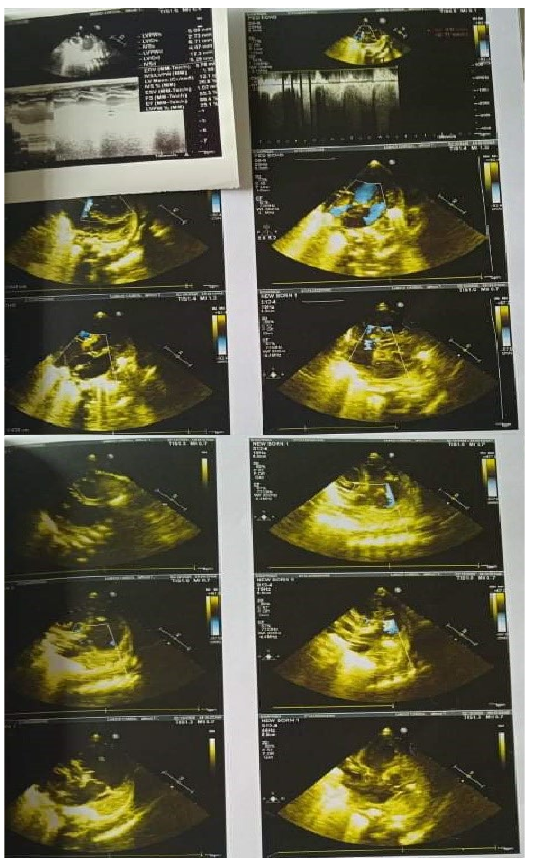
On admission, the infant was cyanosed, icteric up to the thigh, dyspnoeic with respiratory rate 70/min, heart rate 184/min, and SPO(2) 80%. Temperature and capillary refill time were within normal limits, but she was lethargic. There was a murmur on the precordium. Other physical findings were normal. Her total count of WBC was 15500/mm³ with neutrophil-66%, lymphocytes-30%, and platelet count was 70000/mm³.Other laboratory findings included: hemoglobin-15.3 mg/dl, CRP-14.3 mg/L, serum ferritin-380 ng/ml, serum bilirubin-14.9 mg/dl (direct-0.6 mg/dl, indirect-14.3 mg/dl). Serum calcium, serum electrolytes, and blood glucose were normal. Chest x-ray showed ill-defined opacity in the right mid and lower lung zone. Colour Doppler echocardiography revealed C- Transposition of great arteries, superior-inferior ventricle, large (10 mm size) upper muscular VSD with reverse shunt, large ASD with left to right shunt, moderate right AV regurgitation (MR) and severe pulmonary hypertension (Table-1). The second nasopharyngeal swab sample for severe acute respiratory syndrome coronavirus 2 (SARS-CoV-2) by RT-PCR on the 14th postnatal day was also positive, but both parents were found to be COVID-19 negative. The newborn infant was kept in an isolated room by the side of SCANU in the Department of Neonatology with facilities for essential care. Separate service providers were allocated, and visitors were restricted. Treatment was given with antimicrobials-Meropenam and Linezolid being the last 2, along with general measures. Oxygen was given with a nasal cannula and a head box. Injectable frusemide, digoxin, and oral sildenafil were continued, starting from the 10th postnatal day. After 96 hours of admission in CMCH, the neonate deteriorated and expired at 16 days of her postnatal age.
Discussion
The SARS-CoV-2, belonging to the genus Beta coronavirus, is a single-stranded ribonucleic acid (RNA) virus. The virus is transmitted across humans, primarily through respiratory droplets and contact. Infants and children are affected by this virus, usually with a history of exposure to COVID-19. The median incubation period is five days, ranging from 2 to 14 days (11). Despite COVID-19 being the cause of the pandemic in 2020 and thus affecting a large population worldwide, very few studies were published on neonates to understand its pathophysiology, management, and outcome (11–18).
Children are described to assume a less severe clinical course when infected with SARS-CoV-2 (14). The immature immune system in children may respond to the SARS-CoV-2 differently than adults. This may be responsible for less damaging cytokine reactions. To gain entry, the SARS-CoV-2 binds to angiotensin converting enzyme-II (ACE-2) receptors on type II alveolar epithelial cells in the lower respiratory tract. Although the potential harm of the disease remains largely unknown in neonates, they tend to have more severe disease than older children. There are some prognostic differences within the paediatric population. Neonate is associated with an increased likelihood of admission to the intensive care unit (19, 20). Children may present with COVID-19-related severe cardiovascular complications (21, 22). A few reports showed that these viruses cause direct myocardial injury mediated via angio tensin-converting enzyme-2 (ACE-2) (23, 24). Severe hypoxia from acute respiratory damage caused by the virus may result in oxidative stress and cardiac injury from increased myocardial oxygen demand (25). Congenital heart disease (CHD) is the most common congenital anomaly in neonates, accounting for around 30% of all congenital defects (26). Underlying diseases are likely to predispose to severe manifestation of another disease and have a higher mortality rate. However, evidence of outcomes of COVID-19 in children, especially in neonates with congenital heart disease (CHD), is scarce. A COVID-19 patient with CHD, especially of cyanotic verity, is more likely to require ICU support with assisted ventilation. COVID-19 may interact with the cardiovascular system differently, increasing morbidity and mortality in patients with CHD (23, 24, 27–30). COVID-19 may lead to more pronounced hypoxemia and worsened tissue perfusion (21, 22). Additionally, patients with complex CHD complicated by depressed myocardial contractility, pulmonary hypertension, and immunodeficiencies (i.e., DiGeorge syndrome) may develop severe and critical COVID-19 (22, 31). As per the British Congenital Cardiac Association (BCCA), CHD patients, particularly those with complex diseases, are considered at-risk patients prone to developingsevere COVID-19(31).The severity of CHD is an essential factor in predicting the COVID-19 outcome. Immune dysregulation during the severe phase of COVID-19 following inflammatory cascade and cytokine production may result in an increased risk of vascular permeability and multi-organ failure (32). Septal defects, such as VSD and PDA, are generally considered mild and simple cardiac defects, and aortic/mitral valve diseases are considered of moderate complexity. Based on classification by Alsaied et al., these are considered less vulnerable to COVID-19, whereas those with cyanotic CHD, cardiomyopathy, or depressed cardiac function may be at increased risk for COVID-19 (22). The present COVID-19 neonate with cyanotic complex CHD is categorized into the third category with a worse prognosis. Again, the fact is that cardiac diseases have been associated with high mortality in low and middle-income countries (33). Hereby, it is difficult to predict the role of SARS-CoV-2 in mortality in this respect. In a study of 26 neonates with confirmed COVID-19 conducted in Bangladesh, two neonates were reported to have congenital heart disease, and both of them eventually died (34). Presentation of COVID-19 in children and neonates can range from asymptomatic infection to severe respiratory distress (3). History and symptoms associated with neonatal population include prematurity, known contacts with sick patients, temperature instability, respiratory symptoms (congestion, tachypnoea, grunting, respiratory distress, apnea), lethargy, vomiting, poor feeding and diarrhoea (35). Fever and gastro intestinal symptoms appear to be the leading presenting symptoms of COVID-19 in most neonates (12, 15, 16, 18), but the present case was afebrile throughout hospitalization.
Normal or reduced white blood cell count, with decreased lymphocyte normal or increased C-reactive protein (CRP), is an essential finding in COVID-19 patients. Procalcitonin (PCT) is standard in most cases. The level of PCT> 0.5 ng/mL indicates the co-infection with bacteria. Elevation of liver enzymes, muscle enzymes, myoglobin, and increased levels of D-Dimer might be seen in severe cases (36). Chest x-ray findings are variable and nonspecific, including unilateral/bilateral ground-glass opacity, lobar or sub-segmental areas of lung consolidation, and pneumothorax, and they are sometimes expected (36). The neonate shows average total and differential white blood cell count with raised CRP (24 mg/L), normal procalcitonin, and normal chest x-ray. These findings are consistent with many of the published case reports where acute phase reactants show a raised level (37). In contrast, some case reports like Aghdam et al. show completely normal laboratory findings (15).
No specific drug treatment for SARS-CoV-2 is similar to MERS-CoV and SARS-CoV (3). Symptomatic and supportive treatment and supplemental oxygen are mainstay of therapy for COVID-19. Maintaining body temperature, water-electrolyte, acid-base balance, and nutrition is essential. Supplementing water and electrolytes should be appropriate to avoid pulmonary edema and hypoxia (3). Data on the application of effective antiviral drugs (i.e., remdesivir or lopinavir/ ritonavir) and anti-cytokine storm (i.e., tocilizumab) for children, including infants with COVID-19 is lacking. Routine use of corticosteroids (dexamethasone, prednisolone) is not indicated. It suggests that low-dose corticosteroids are helpful for patients with severe symptoms, as well as oxygen supplementation and ventilation (38).
The management strategy in the present case is customized according to the neonate’s condition and the known effect of COVID-19. Recommendations on management strategies for pediatric patients with CHD might be considered. The general consideration of mild COVID-19 in children does not include patients with CHD. It is necessary to pay greater attention to formulating guidelines for treating pediatric patients, especially neonates with COVID-19 and CHD (39). A notable aspect of the present case is that though the parents of the neonate were not affected by COVID-19, a history of contact with COVID-19 was also not found, and the newborn infant was COVID-19 positive. Here, the possibility of nosocomial transmission of COVID-19 or transmission from caregivers to the neonate could not be ruled out.
Conclusion
The present case is one of the first few reported neonatal cases of COVID-19 with complex congenital heart disease in Bangladesh. Much is yet to be known about SARS-CoV-2 infection in CHD patients, especially infants. However, it is now considered that severe consequences of COVID-19 may develop in infants with CHD. As COVID-19 goes on, further trials involving CHD infants are required to assess the clinical effect of COVID-19 in these patients. Suspicion of the occurrence of COVID-19 in newborn infants with prompt identification along with appropriate measures is essential to limit transmission of such conditions.
Declarations
- Author contributions (CRediT)
- All authors contributed equally to all 14 CRediT roles (Conceptualization, Data curation, Formal analysis, Funding acquisition, Investigation, Methodology, Project administration, Resources, Software, Supervision, Validation, Visualization, Writing – original draft, Writing – review & editing).
- Funding
-
Funding information was not reported in the published version of this article.
- Conflicts of interest
- The authors declare no conflict of interest.
- Ethics approval
- Ethics approval details were not reported in the published version of this article.
- Data availability
- A data availability statement was not reported in the published version of this article.
References (39)
33 of 39 references are linked to their DOI.
- Novel Coronavirus Pneumonia Emergency Response Epidemiology Team. The epidemiological characteristics of an outbreak of 2019 novel coronavirus diseases (COVID-19) – China, 2020. China CDC Weekly 2020; 2(8):113–122 DOI Crossref PubMed Google Scholar
- World Health Organization. WHO Director-General’s statement on IHR Emergency Committee on Novel Coronavirus (2019-nCoV). January 30, 2020. Available at: https:// www.who.int/dg/speeches/detail/who director general statement on ihr emergency committee on novel coronavirus-(2019-ncov). PubMed Google Scholar
- Lu Q, Shi Y. Coronavirus disease (COVID-19) and neonate: what neonatologist needs to know. J Med Virol 2020; 92: 564-567 DOI Crossref PubMed Google Scholar
- Goldshtrom N, Vargas D, Vasquez A, Kim F, Desai K, Turner ME et al. Neonates with Complex Cardiac Malformation and Congenital Diaphragmatic Hernia Born to SARS-CoV-2 Positive Women-A Single Center Experience. World J Pediatr Congenit Heart Surg 2020;11(6):697-703 DOI Crossref PubMed Google Scholar
- Elbehery M, Munshi FA, Alzahrani A, Bakhsh M, Alariefy M. COVID-19 in an Intrauterine Growth Restriction (IUGR) Infant with Congenital Heart Disease: Case Report and Literature Review. Cureus 2020;12(9):e10294 DOI Crossref PubMed Google Scholar
- Krishnamurthy G, Sahni R, Leone T, Kim F, Brooks MC, Morales SV, Koziakova A, Mills C, Capac CP, Penn A. Care of the COVID-19 exposed complex newborn infant. Semin Perinatol. 2020; 44(7):151282 DOI Crossref PubMed Google Scholar
- Dilli D, Taşoğlu I. Perioperative care of the newborns with CHDs in the time of COVID-19. Cardiol Young. 2020; 30(7):946-954 DOI Crossref PubMed Google Scholar
- Salik I, Mehta B. Tetralogy of Fallot palliation in a COVID-19 positive neonate. J Clin Anesth 2020;66: 109914. DOI Crossref PubMed Google Scholar
- Spencer R, Chaves DV, Brooks MC, Goldshtrom N, Moroz L, Miller R et al. Performing an urgent neonatal cardiac intervention safely during the COVID-19 pandemic. Prog Pediatr Cardiol 2021;60: 101265 DOI Crossref PubMed Google Scholar
- Das JC, Khan MMR, Ferdous J, Shaheen M, Hasan SH. Neonatal COVID-19 in A Tertiary Care Hospital of Chattogram: A Case Report. Bangladesh J Child Health 2020; 44(3):170-173 DOI Crossref PubMed Google Scholar
- Li Q, Med M, Guan X, Wu P, Wang X, Zhou L et al. Early transmission dynamics in Wuhan, China, of novel coronavirus infected pneumonia.N Engl J Med 2020; 382:1199-1207 DOI Crossref PubMed Google Scholar
- Zeng L, Xia S, Yuan W, Yan K, Xiao F, Shao J, Zhou W. Neonatal early-onset infection with SARSCoV- 2 in 33 neonates born to mothers with COVID-19 in Wuhan, China. JAMA Pediatr 2020;174(7):722-725 DOI Crossref PubMed Google Scholar
- Alzamora MC, Paredes T, Caceres D, Webb CM, Valdez LM, La Rosa M. Severe COVID-19 during pregnancy and possible vertical transmission. Am J Perinatol 2020;37(8):861-865 DOI Crossref PubMed Google Scholar
- Hu X, Gao J, Luo X, Luo X, Feng L, Liu W et al. severe acute respiratory syndrome coronavirus 2 (SARS-CoV-2) vertical transmissions in neonates born to mothers with coronavirus disease 2019 (COVID-1) pneumonia. Obstet Gynecol 2020; 136(1):1-3 DOI Crossref PubMed Google Scholar
- Aghdam MK, Jafari N, Eftekhari K. Novel coronavirus in a 15-day-old neonate with clinical signs of sepsis, a case report. Infect Dis 2020; 52(6):427-429 PubMed Google Scholar
- Patek P, Corcoran J, Adams L, Khandhar P. SARS-CoV-2 infection in a 2-week-old male with neutropenia. Clin Pediatr (Phila) 2020; 59(9-10):918-920 DOI Crossref PubMed Google Scholar
- Munoz AC, Nawaratne U, McMann D, Ellsworth M, Meliones J, Boukas K. Late-onset neonatal sepsis in a patient with Covid-19. N Engl J Med 2020, 382: e49 DOI Crossref PubMed Google Scholar
- Dumpa V, Kamity R, Vinci AN, Noyola E, Noot A. Neonatal Coronavirus 2019 (COVID-19) Infection: A Case Report and Review of Literature. Cureus 12(5): e8165 49 77 Complex Heart Disease and SARS-CoV-2 Jagadish C Das et al. DOI Crossref PubMed Google Scholar
- Götzinger F, Santiago-García B, Noguera-Julián A, Lanaspa M, Lancella L, Carducci FIC et al. COVID-19 in children and adolescents in Europe: a multinational, multicentre cohort study. Lancet Child Adolesc Health 2020; 4:653– 61 DOI Crossref PubMed Google Scholar
- Zeng L, Xiao T, Zhou W. Vertical transmission of severe acute respiratory syndrome coronavirus 2 from the mother to the infant—reply. JAMA Pediatr 2020; 174:1008 DOI Crossref PubMed Google Scholar
- Giacomet V, Manfredini VA, Meraviglia G, Peri CF, Sala A, Longoni E, et al. Acute inflammation and elevated cardiac markers in a two-month-old infant with severe acute respiratory syndrome coronavirus 2 infection presenting with cardiac symptoms. Pediatr Infect Dis J 2020; 39: e149– 51 DOI Crossref PubMed Google Scholar
- Alsaied T, Aboulhosn JA, Cotts TB, Daniels CJ, Etheridge SP, Feltes TF, et al. Coronavirus disease 2019 (COVID-19) pandemic implications in pediatric and adult congenital heart disease. J Am Heart Assoc 2020; 9: e017224 DOI Crossref PubMed Google Scholar
- Ukimura A, Satomi H, Ooi Y, Kanzaki Y. Myocarditis associated with Influenza A H1N1pdm2009. Influenza Res Treat 2012; 2012: 351979 DOI Crossref PubMed Google Scholar
- Rao S, Sasser W, Diaz F, Sharma N, Alten J. Coronavirus associated fulminant myocarditis successfully treated with intravenous immunoglobulin and extracorporeal membrane oxygenation. Chest 2014; 146: 336A DOI Crossref PubMed Google Scholar
- Tan W, Aboulhosn J. The cardiovascular burden of coronavirus disease 2019 (COVID-19) with a focus on congenital heart disease. Int J Cardiol 2020 DOI Crossref PubMed Google Scholar
- Van der Linde D, Konings EE, Slager MA, Witsenburg M, Helbing WA, Takkenberg JJ, et al. Birth prevalence of congenital heart disease worldwide: a systematic review and meta-analysis. J Am Coll Cardiol 2011; 58:2241–7 DOI Crossref PubMed Google Scholar
- Clerkin KJ, Fried JA, Raikhelkar J, Sayer G, Griffin JM, Masoumi A et al. Coronavirus disease 2019 (COVID -19) and cardiovascular disease. Circulation 2020. [Epub ahead of print]. DOI Crossref PubMed Google Scholar
- Wang D, Hu B, Hu C, Zhu F, Liu X, Zhang J et al. Clinical characteristics of 138 hospitalized patients with 2019 Novel Coronavirus–infected pneumonia in Wuhan, China. JAMA 2020; 323: 1061–1069 DOI Crossref PubMed Google Scholar
- Mao L, Jin H, Wang M, Hu Y, Chen S, He Q et al. Neurologic manifestations of hospitalized patients with coronavirus disease 2019 in Wuhan, China. JAMA Neurol 2020; 77: 1–9 DOI Crossref PubMed Google Scholar
- Young BE, Ong SWX, Kalimuddin S, Low JG, Tan SY, Loh J et al. Epidemiologic features and clinical course of patients infected with SARS-CoV-2 in Singapore. JAMA 2020; 323: 1488– 1494 DOI Crossref PubMed Google Scholar
- Association BCC. BCCA COVID-19 Guidance for Vulnerable Groups With Congenital Heart Disease. (2020). Available online at: https://www.bcca - uk.org/pages/ news_box.asp? NewsID= 19495710 PubMed Google Scholar
- Mahmoudi S, Rezaei M, Mansouri N, Marjani M, Mansouri D. Immunologic features in coronavirus disease 2019: functional exhaustion of T cells and cytokine storm. J Clin Immunol 2020; 40: 974–6 DOI Crossref PubMed Google Scholar
- Liu L, Oza S, Hogan D, Chu Y, Perin J, Zhu PJ et al. Global, regional, and national causes of under-5 mortality in 2000-15: an updated systematic analysis with implications for the sustainable development goals. Lancet 2016; 388:3027–3035 DOI Crossref PubMed Google Scholar
- Saha S, Ahmed ANU, Sarkar PK, Bipul MRA, Ghosh K, Rahman SW et al. The Direct and Indirect Impact of SARS-CoV -2 Infections on Neonates: A Series of 26 Cases in Bangladesh. The Pediatric Infectious Disease Journal 2020: 39: e398-e405 DOI Crossref PubMed Google Scholar
- Wang L, Shi Y, Xiao T, Fu J, Feng X, Mu D et al. Chinese expert consensus on the perinatal and neonatal management for the prevention and control of the 2019 novel coronavirus infection (first edition). Ann Transl Med 2020; 8:47 DOI Crossref PubMed Google Scholar
- Chen Z-M, Fu J-F, Shu Q, Chen Y-H, Hua C -Z, Li F-B, et al. Diagnosis and treatment recommendations for pediatric respiratory infection caused by the 2019 novel coronavirus. World J Pediatr 2020; 16(3): 240-246 DOI Crossref PubMed Google Scholar
- Liguro I, Pilotto C, Bonnani M, Ferrari ME, Pusiol A, Nocerino A et al. SARS-COV-2 infection in children and newborns: a systematic review. Eur J Pediatr 2020;179: 1029-4 6 PubMed Google Scholar
- National guidelines on clinical management of COVID-19. DGHS, Govt of the People’s Republic of Bangladesh 2020; 8:1-56 PubMed Google Scholar
- Haji EME, Pourakbari B, Gorgi M, Ekbatani MS, Navaeian A, Khodabandeh M et al. COVID-19 and congenital heart disease: a case series of nine children. World J Pediatr 2021; 17:71–78 PubMed Google Scholar
Respond to this article
Comments on a published article are welcome as a Letter to the Editor.
Get an e-mail when new articles in your fields are published
Questions to the authors
Questions are moderated: an editor approves each question, the authors answer, and an editor approves the answer before both appear here.
No answered questions yet.
Ask the authors a question
Discussion
Comments are moderated: they appear after the writer confirms the e-mail address and an editor approves them. Each comment carries a conflict-of-interest statement.
No comments yet.
Write a comment
Read the full text
Open the PDF here
Loading the PDF…
If the PDF does not show here, use the download button above.
How to cite this article
Das JC, Khan MMR, Ferdous J, Shaheen M, Hasan SH, Das A, et al. A Case Report on SARS-CoV-2 Positive Neonate with Complex Heart Disease. Ulutas Med J. 2024;10(2):44-50. doi:10.5455/umj.20240327041038
Das, J. C., Khan, M. M. R., Ferdous, J., Shaheen, M., Hasan, S. H., Das, A., Akther, A., & Bhuiyan, K. (2024). A Case Report on SARS-CoV-2 Positive Neonate with Complex Heart Disease. The Ulutas Medical Journal, 10(2), 44–50. https://doi.org/10.5455/umj.20240327041038
Das, J.C. et al. (2024) 'A Case Report on SARS-CoV-2 Positive Neonate with Complex Heart Disease', The Ulutas Medical Journal, 10(2), pp. 44–50. doi: 10.5455/umj.20240327041038.
@article{umj195499,
  title = {A Case Report on SARS-CoV-2 Positive Neonate with Complex Heart Disease},
  author = {Das, Jagadish C and Khan, Mohammad Masudur Rahaman and Ferdous, Jannatul and Shaheen, Mohammed and Hasan, Syeda Humaida and Das, Adrita and Akther, Arifa and Bhuiyan, Kamrunnahar},
  journal = {The Ulutas Medical Journal},
  year = {2024},
  volume = {10},
  number = {2},
  pages = {44--50},
  doi = {10.5455/umj.20240327041038},
  url = {https://www.ulutasmedicaljournal.com/?mno=195499},
  issn = {2149-388X}
}