The Ulutas Medical Journal · ISSN 2149-0430 (print), 2149-388X (online) · https://www.ulutasmedicaljournal.com/?mno=57352
Original Article · Open access
Are Clinicians Aware Enough of Syphilis in HIV-Infected Populations? The Clinical and Laboratory Findings in A Training Hospital
Also available in: العربية · Türkçe · 中文
- Sultan Abdulhamid Han Training and Research Hospital, Department of Infectious Diseases and Clinical Microbiology ROR
Abstract
- Background
- Our study aimed to reveal the seroprevalence of syphilis in HIV-positive patients in our center and to reveal the diagnostic performance of the reverse sequence algorithm Materials and Methods: The study data were obtained retrospectively. Statistical analyses were carried out using SPSS version 20.0. Screening for syphilis was performed by reverse sequence algorithm using chemiluminescent microparticle immunoassay (CMIA), Rapid Plasma Reagin and T.pallidum hemagglutination tests.
- Results
- A total of 91 HIV-positive patients were included in the study. Of these patients, 15 (16.48%) had never been tested for syphilis, and the rate of the patients who have a proper follow-up for syphilis was only 36.17%. Nineteen patients were diagnosed with syphilis; the overall syphilis rate was 20.88%. The mean time to the diagnosis of syphilis was 9.89±13.5 months, ranging from 0 to 48 months. Of the 76 patients screened for syphilis, 19 (25%) had CMIA positivity with concurrent RPR positivity. Concurrent TP-HA testing was performed in 54 (71.05%) of the 76 patients and 17 (89.4%) of 19 patients with CMIA positivity, and all of these patients with CMIA positivity revealed positive TP-HA results.
- Conclusions
- Syphilis co-infection rate in HIV-positive patients in our hospital was high. However, there are still deficiencies in the screening of syphilis, and it has been shown that a specific screening algorithm is not adopted by the clinicians who follow-up HIV-positive patients. Besides, non-treponemal and treponemal tests in the reverse sequence algorithm revealed reliable results in the diagnosis of syphilis in HIV-infected patients.
Keywords
Full text
Introduction
It is estimated that there are about 37 million HIV-positive cases worldwide (1). Within the era of highly active antiretroviral treatments, patients with HIV infection have got healthy life expectancy; consequently, management of co-infections, comorbidities and side effects of antiretroviral drugs have become the most essential problems in terms of morbidity and mortality in HIV-infected patients. Viral infections such as hepatitis B and hepatitis C, as well as bacterial infections such as syphilis, mycoplasma and gonorrhoea, are the most essential and common co-infections in HIV patients (2). In general population, 17.7 million people between 15 and 49 years-old are estimated to be infected with syphilis, and about 5.6 million new cases are reported each year (3). The incidence of syphilis is increasing significantly every year especially in special populations like people with multiple sexual partners, men having sex with men (MSM) and HIV-positive patients (3). Therefore, syphilis screening is recommended in HIV-positive individuals once a year; the selection should be carried out quarterly in case of having risk factors such as having multiple sexual partners or a history of other sexually transmitted diseases and being MSM (4).
Screening and diagnosis of syphilis is usually performed by serological methods including non-treponemal tests such as venereal disease research laboratory (VDRL) and rapid plasma reagan (RPR), or treponemal tests such as enzyme immunoassay(EIA)/chemiluminescence immunoassay (CMIA), fluorescent treponemal antibody (FTA-ABS), Treponema pallidum hemagglutination (TP-HA), and T. pallidum particle agglutination (TP-PA). Screening can be carried out with two different algorithms, either conventional or reverse sequence; the US Centers for Disease Control and Prevention (CDC) have reported that reverse sequence algorithm is more cost-effective than traditional algorithm especially in laboratories with a high testing frequency (5). According to this algorithm, if EIA/CMIA is negative, syphilis is excluded. Syphilis is confirmed if EIA/CMIA and PRP are positive without previous syphilis treatment history. If EIA/CMIA positive and RPR negative, a second treponemal test is recommended for verification. Although FTA- ABS is considered the gold standard for diagnosis of syphilis, CDC no longer supports it for the confirmation of syphilis, as it requires experienced personnel and a dedicated fluorescent antibody microscope, and it also has lower sensitivity and specificity than other treponemal tests; instead, T. pallidum particle agglutination assay(TP-PA)isrecommended (6). Our study aimed to reveal the seroprevalence of syphilis in HIV-positive patients in our center and to reveal the diagnostic performance of the syphilis-CMIA test using the reverse sequence algorithm. In addition to this, we aimed to question awareness of infectious disease specialists in our center about syphilis and to reveal the snapshot of clinical and laboratory follow-up procedure in syphilis screening in HIV-positive patients.
Materials and Methods
Subjects
All patients diagnosed or being followed-up with HIV infection at the infectious diseases outpatient clinic in our training hospital between September 1, 2016, and December 31, 2018 were included in the study. To meet the inclusion criteria in the study, a patient with HIV infection should have been admitted to infectious disease outpatient clinic at least once. The study was designed as a retrospective descriptive and approved by Health Sciences University, Hamidiye Non-Interventional Ethics Committee (Date: 30.11.2018 and No: 18/72).
Methods
Confirmation of HIV infection by Western Blot test and PCR was required. We searched whether syphilis screening was performed at the first visit and regularly; regular syphilis screening follow-up criteria was that at least one of the screening tests (CMIA ± TP-HA) was requested at least once every 12 months (4). Of these patients, those who did not complete the 12-month follow-up period were included in the group who were screened for syphilis only at the first visit. Patients who were followed up for more than 12 months were included in the group of patients who were also investigated for regular syphilis screening. Syphilis screening in our hospital laboratory is performed by reverse sequence diagnostic algorithm as recommended by CDC (5). Screening of syphilis is carried out with chemiluminescence micro particle immunoassay (CMIA)(Abbot®, System) method in the first step and quantification of positive results with Rapid Plasma Reagin (RPR) is carried out. Besides, T. pallidum hemagglutination(TP-HA) test from treponemal tests may be carried out simultaneously following the demand of clinicians.
Statistical analysis The age, sex, duration of follow-up/treatment of each patient, syphilis test results, whether syphilis screening was carried out at first visit and/or regularly, whether syphilis positive patients received treatment and whether they were consulted to ophthalmology-cardiology clinics were recorded in Microsoft Office Excel table. SPSS version 20.0 package program was used for statistical analysis. Minimum, maximum, average and median values were calculated as descriptive analysis. P<0.05 was considered statistically significant.
Results
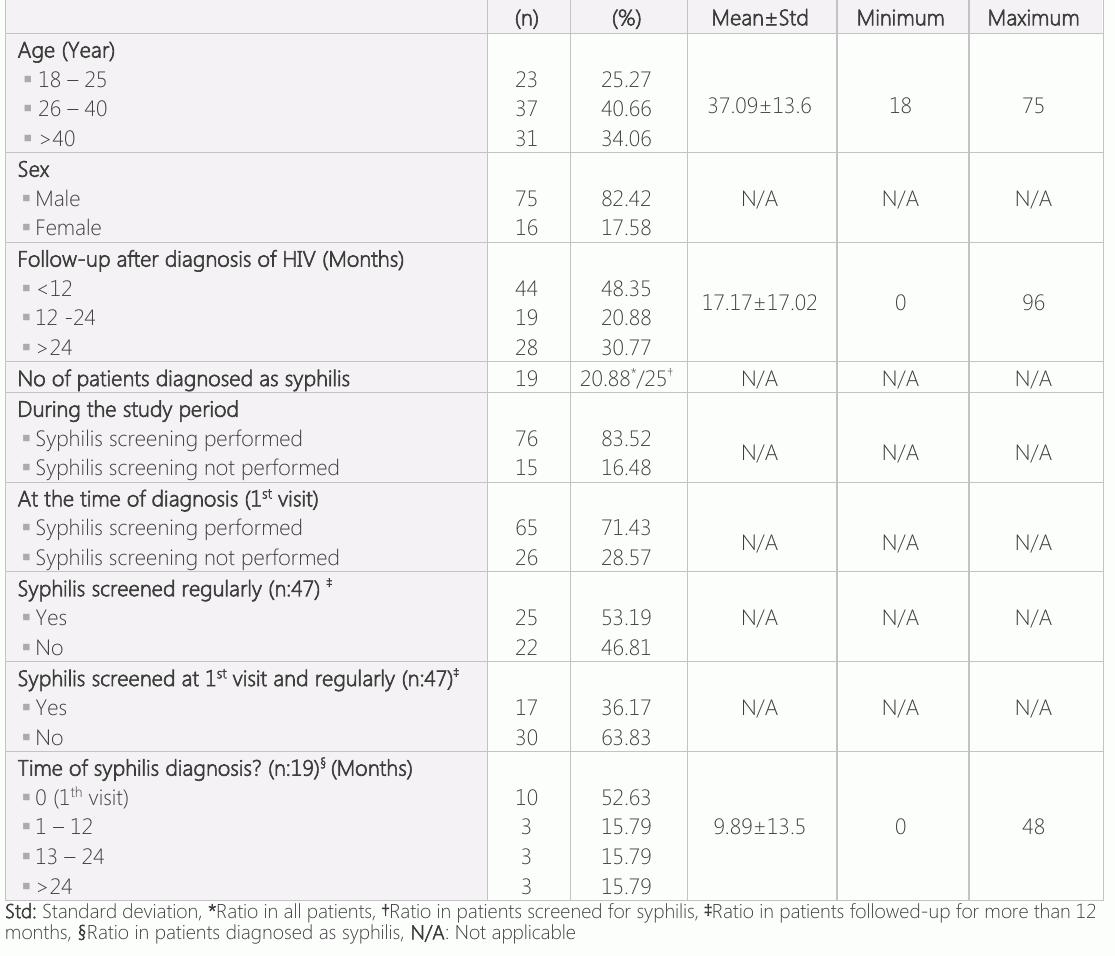
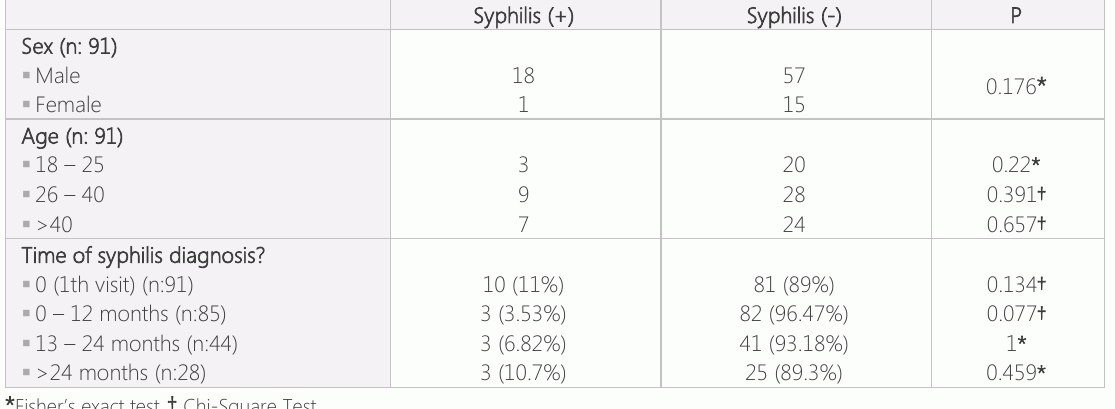
A total of 91 HIV-infected patients who were admitted at least once in our outpatient clinic during the study period were included in the study. Of the patients, 75 (82.42%) were male, while 16 (17.58%) were female, and the mean age was 37.09±13.6 years. The mean follow-up period of the patients was 17.1±17.02 months ranging from 0 to 96 months (Table-1). No syphilis screening was performed in 15 (16.48%) patients. During the study period, 19 patients were diagnosed with syphilis; the syphilis rate was 20.88% in all patients while the rate was 25% considering patients that syphilis was screened (Table-1). None of the patients had a history of syphilis treatment. Syphilis screening was not performed in the first visit in 26 (28.57%) patients. Of the 47 patients who were followed for 12 months or more, 22 (46.81%) did not have regular syphilis screening; moreover, only 36.17% (n:17) of the 47 patients were screened for syphilis both at the first visit and regularly. The mean time to diagnosis of syphilis was 9.89±13.5 months, ranging from 0 to 48 months. Of the 19 patients diagnosed with syphilis, ten were diagnosed at the first visit. The number of patients diagnosed with syphilis in the first 12 months, between 12 and 24 months, and 24 months after the first visit was 3 in each of the three periods (Table 1). There was no significant difference in age, sex and time-related-ratio of syphilis detection between syphilis positive and negative patient groups (Table-2).
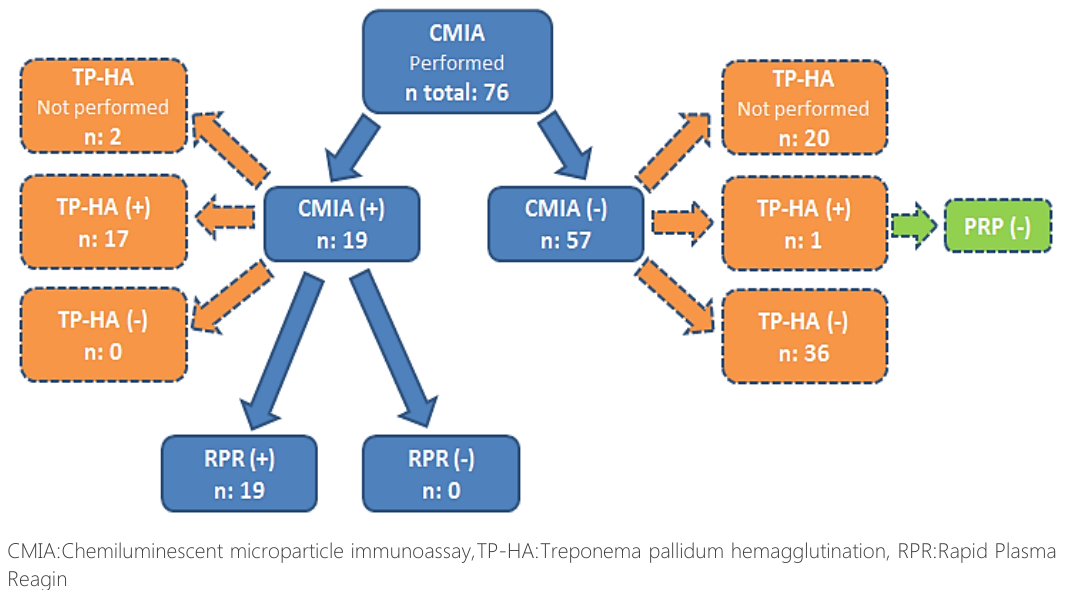
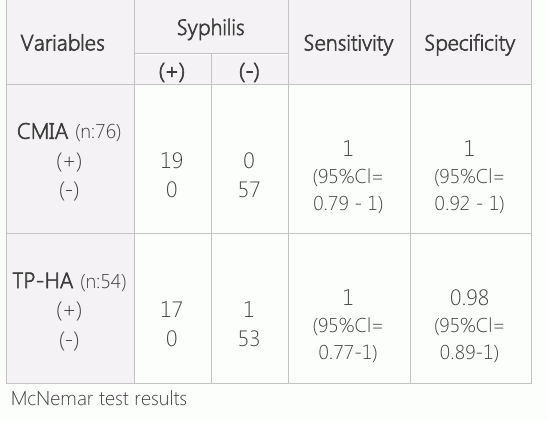
Of the 76 patients screened for syphilis, 19 (25%) had CMIA positivity, and these all had concurrent RPR positivity (Figure-1). There were no cases with discordant CMIA and RPR results. Concurrent TP-HA testing was performed in 54 (71.05%) of 76 patients with CMIA test carried out and in 17 (89.4%) of 19 patients who were positive for CMIA, and all of these 17 patients had positive TP-HA results. Only one case (1.85%) had concurrent TP-HA positivity although their CMIA and RPR results were negative (Figure-1). Sensitivity and specificity of CMIA in diagnosis of syphilis were 100%, while sensitivity and specificity of TP-HA were 100% and 98%, respectively (Table-3). Three patients who were diagnosed with HIV infection in dermatology clinic in screening tests after diagnosis of syphilis were referred to our clinic from dermatology clinic.
Discussion
Not only the frequency of syphilis has been revealed to increase significantly in both ESE and HIV-positive patient populations in recent years, but also it has been reported that syphilis also increases the risk of HIV infection (7). According to a systematic review including HIV-infected patients, the prevalence of syphilis in HIV patients was reported reaching up to 58% with a median prevalence of 9.5% (8). Since some of the studies included in this review are point prevalence studies, the rate of syphilis is expected to be higher than that of point prevalence studies. The syphilis seropositivity rate in HIV-infected population in our study was found to be consistent with the general literature. According to a study reported from Turkey, the rate of syphilis was reported to be 12.9% considering only the screening results at first visit of patients (9). If we think the screening results at first visit of patients in our study, the rate of syphilis co-infection was 15.4% (10 out of 65 patients).
On the other hand, syphilis is considered to be one of the most critical indicator infections in terms of HIV infection; therefore, HIV screening is recommended in all patients with syphilis (10, 11). In Turkey, there are no data on HIV co-infection rate among patients with syphilis. The fact that three cases in our study were diagnosed as HIV in screening after detection of syphilis supports need for an epidemiological study in our country. In a systematic review, the median seroprevalence of HIV positivity in syphilis patients was reported to be 15.7% and 27.5% in men (12). In addition, a very high rate (42%) of HIV co-infection has been demonstrated in patients with syphilis in the ESE population in Western Europe (13).
In our study, including high-risk patients for syphilis, it was observed that CMIA, RPR and TP- HA results showed a high level of compliance. In a survey conducted in general population, TP-HA positivity rates were found to be over 80% even in CMIA (+) / RPR (-) cases (14). The fact that this ratio was similar to the TP-HA positivity rates in CMIA (+) / RPR (+) cases were interpreted as the problem was not in CMIA performance. RPR kit, study technique or the previous treatment history may have affected the RPR results. As a result, the authors recommended increasing the signal/cut-off (S/CO) value in CMIA to reduce the false positivity in CMIA and discordant results in the reverse sequence algorithm. According to the results of a retrospective study including 12.195 tests studied by reverse sequence algorithm made in low-risk general population by Uzbek et al. (15) in Turkey, 206 (2%) patients found to be CMIA positive, and 92(45%) of these patients had negative RPR results. However, 37 (40%) of these RPR negative patients were revealed to be positive for TP-HA performed as a second treponemal test; thereby, RPR was concluded to be false negative. According to a study by Sonmez et al. (16) including 362 probable syphilis patients according to the results of rapid diagnostic tests, 311 patients (85.9%) were diagnosed as syphilis when the screening was performed with treponemal test (TP-HA) and reversed algorithm. However, only 173 patients (47.8%) could be diagnosed as syphilis when testing was performed with non-treponemal analysis and classical algorithm, meaning that when the traditional algorithm was used, 4 out of 10 syphilis patients could be to be undiagnosed. According to the data of CDC report in 2011, the ratio of cases with EIA/CMIA positive and TP-PA/FTA-ABS negative (discordant test results) was only 14.1% in the high-risk population; however, the ratio of conflicting results was 40.8% in the general population (6). Since the rate of discordant results in the general population is almost three times higher, it has been recommended that the positive results of treponemal screening tests should be interpreted carefully in at least the low-risk population. However, since both the sensitivity and specificity of CMIA are very high in the high-risk population, it can be concluded that second treponemal tests, such as TP-HA, do not need to be tested concurrently. These tests may be performed in the presence of a discordant result.
In conclusion, syphilis co-infection rate in HIV-positive patients in our hospital was high. However, there are still deficiencies in the screening of syphilis, and it has been shown that a specific screening algorithm is not adopted by the clinicians who follow-up HIV-positive patients. Also, non-treponemal and treponemal tests in reverse sequence algorithm revealed reliable results in diagnosis of syphilis in HIV-infected population. Since there is no overall data for Turkey, there is a need for more comprehensive multicenter epidemiological studies to reveal the prevalence of syphilis in HIV positive population to increase awareness about the disease.
Declarations
- Author contributions (CRediT)
- All authors contributed equally to all 14 CRediT roles (Conceptualization, Data curation, Formal analysis, Funding acquisition, Investigation, Methodology, Project administration, Resources, Software, Supervision, Validation, Visualization, Writing – original draft, Writing – review & editing).
- Funding
-
The authors declared that this study received no financial support.
- Conflicts of interest
- None of the authors has a conflict of interest with the present article.
- Ethics approval
- The study was designed as a retrospective descriptive and approved by Health Sciences University, Hamidiye Non -Interventional Ethics Committee (Date: 30.11.2018 and No: 18/72).
- Data availability
- A data availability statement was not reported in the published version of this article.
References (16)
12 of 16 references are linked to their DOI.
- Platt L, Easterbrook P, Gower E, McDonald B, Sabin K, McGowan C, Yanny I, Razavi H, Vickerman P. Prevalence and burden of HCV co-infection in people living with HIV: a global systematic review and meta-analysis. Lancet Infect Dis. 2016;16:797-808 DOI Crossref PubMed Google Scholar
- Khaw C, Richardson D, Matthews G, Read T. Looking at the positives: proactive management of STIs in people with HIV. AIDS Res Ther. 2018;15:28 DOI Crossref PubMed Google Scholar
- Peeling RW, Mabey D, Kamb ML, Chen XS, Radolf JD, Benzaken AS. Syphilis. Nat Rev Dis Primers. 2017;3:17073 PubMed Google Scholar
- Levy SB, Gunta J, Edemekong P. Screening for Sexually Transmitted Diseases. Prim Care. 2019;46:157-173 DOI Crossref PubMed Google Scholar
- Centers for Disease Control and Prevention (CDC). Syphilis Testing Algorithms Using Treponemal Tests for Initial Screening Four Laboratories, New York City, 2005-2006. MMWR Morb Mortal Wkly Rep. 2008;57;872-875 PubMed Google Scholar
- Centers for Disease Control and Prevention (CDC). Discordant results from reverse sequence syphilis screening- -five laboratories, United States, 2006-2010. MMWR Morb Mortal Wkly Rep. 2011;60:133-7 DOI Crossref PubMed Google Scholar
- Hook EW 3rd. Syphilis. Lancet. 2017;389:1550-1557 PubMed Google Scholar
- Kalichman SC, Pellowski J, Turner C. Prevalence of sexually transmitted co-infections in people living with HIV/AIDS: systematic review with implications for using HIV treatments for prevention. Sex Transm Infect. 2011;87:183 -90 DOI Crossref PubMed Google Scholar
- Aydin ÖA, Karaosmanoğlu HK, Sayan M, İnce ER, Nazlıcan Ö. Seroprevalence and risk factors of syphilis among HIV/AIDS patients in Istanbul, Turkey. Cent Eur J Public Health. 2015;23:65 -8 DOI Crossref PubMed Google Scholar
- Avoundjian T, Stewart J, Peyton D, Lewis C, Johnson K, Glick SN, Golden MR, Khosropour CM. Integrating HIV testing into syphilis partner services in Mississippi to improve HIV case finding. Sex Transm Dis. 2019;46:240–245 DOI Crossref PubMed Google Scholar
- Ong JJ, Fu H, Smith MK, Tucker JD. Expanding syphilis testing: a scoping review of syphilis testing interventions among key populations. Expert Rev Anti Infect Ther. 2018;16:423-432. DOI Crossref PubMed Google Scholar
- Blocker ME, Levine WC, St Louis ME. HIV prevalence in patients with syphilis, United States. Sex Transm Dis. 2000;27: 53-9 DOI Crossref PubMed Google Scholar
- Dougan S, Evans BG, Elford J. Sexually transmitted infections in Western Europe among HIV-positive men who have sex with men. Sex Transm Dis. 2007;34:783-90 DOI Crossref PubMed Google Scholar
- Lee K, Park H, Roh EY, Shin S, Park KU, Park MH, Song EY. Characterization of sera with discordant results from reverse sequence screening for syphilis. Biomed Res Int. 2013;2013:269347 DOI Crossref PubMed Google Scholar
- Özbek ÖA, Doğan Y. Evaluation of a Syphilis Testing Algorithm Using a Treponemal Test for Screening. Mikrobiyol Bul. 2011;45:93-103 PubMed Google Scholar
- Sönmez C. Sifiliz Evaluation of RPR, TPHA Test Results and Diagnostic Algorithms Used in Syphilis Diagnosis. Türk Mikrobiyol Cem Derg. 2018;48:72 -77 DOI Crossref PubMed Google Scholar
Respond to this article
Comments on a published article are welcome as a Letter to the Editor.
Get an e-mail when new articles in your fields are published
Questions to the authors
Questions are moderated: an editor approves each question, the authors answer, and an editor approves the answer before both appear here.
No answered questions yet.
Ask the authors a question
Discussion
Comments are moderated: they appear after the writer confirms the e-mail address and an editor approves them. Each comment carries a conflict-of-interest statement.
No comments yet.
Write a comment
Read the full text
Open the PDF here
Loading the PDF…
If the PDF does not show here, use the download button above.
How to cite this article
Yenilmez EA, Cetinkaya RA. Are Clinicians Aware Enough of Syphilis in HIV-Infected Populations? The Clinical and Laboratory Findings in A Training Hospital. Ulutas Med J. 2019;5(3):202-208. doi:10.5455/umj.20190717083737
Yenilmez, E. A., & Cetinkaya, R. A. (2019). Are Clinicians Aware Enough of Syphilis in HIV-Infected Populations? The Clinical and Laboratory Findings in A Training Hospital. The Ulutas Medical Journal, 5(3), 202–208. https://doi.org/10.5455/umj.20190717083737
Yenilmez, E.A. and Cetinkaya, R.A. (2019) 'Are Clinicians Aware Enough of Syphilis in HIV-Infected Populations? The Clinical and Laboratory Findings in A Training Hospital', The Ulutas Medical Journal, 5(3), pp. 202–208. doi: 10.5455/umj.20190717083737.
@article{umj57352,
  title = {Are Clinicians Aware Enough of Syphilis in HIV-Infected Populations? The Clinical and Laboratory Findings in A Training Hospital},
  author = {Yenilmez, Ercan Aytac and Cetinkaya, Riza Aytac},
  journal = {The Ulutas Medical Journal},
  year = {2019},
  volume = {5},
  number = {3},
  pages = {202--208},
  doi = {10.5455/umj.20190717083737},
  url = {https://www.ulutasmedicaljournal.com/?mno=57352},
  issn = {2149-388X}
}