The Ulutas Medical Journal · ISSN 2149-0430 (print), 2149-388X (online) · https://www.ulutasmedicaljournal.com/?mno=46759
Original Article · Open access
Effect of Domperidone on Lactation in Low Milk Supply Women in Tehran, Iran
Also available in: العربية · Türkçe · 中文
- Associate Professor, Department of Pediatrics, Tehran Medical Sciences, Islamic Azad University, Tehran, Iran ROR
- Students’ Research Committee, Tehran Medical Sciences, Islamic Azad University, Tehran, Iran ROR
- Medical Student, School of Medicine, Tehran Medical Sciences, Islamic Azad University, Tehran, Iran ROR
- Master of Public Health (M.P.H.), Health Policy Research Center, Tehran Medical Sciences, Islamic Azad University, Tehran, Iran ROR
Abstract
- Background
- The promotion of breastfeeding is a simple and efficient strategy in reducing morbidity and mortality among newborns worldwide. Domperidone is a blocker of dopamine receptors, which causes prolactin release. We aimed to determine the efficacy of Domperidone on the amount of breast milk secretion among mothers with low-milk-production.
- Materials and Methods
- This interventional study was performed on 16 consecutive low-milk-producing women who were attending to Azad University Hospitals during 2013-2014. Eligible mothers received Domperidone at a dose of 30 mg orally/day (10 mg tablet three times daily) for a week. Breast-milk volume, as well as the serum levels of prolactin, were determined before and after the intervention. Also, any adverse drug reactions were recorded.
- Results
- The mean breast milk volume was 173.7±47.7 and 326.8±26.1 ml before and after the intervention, respectively. Also, administered of Domperidone cloud significantly increase of %53.1 (p<0.001) in daily milk production. Also, the mean serum prolactin level was 161.1±19.1 and 254±25.5 ng/ml, before and after medications, respectively, which showed a significant increase of %63.46 (p=0.0001).
- Conclusion
- Domperidone increases the volume of breast milk production among nursing mothers. There was no drug-related side effect for mothers and infants.
Keywords
Full text
Introduction
Head Breast milk is the complete primary nutrition for infants with a range of lifelong benefits for infants' health, growth, immunity, and development as well as for the mothers (1, 2). Comparing to formula-fed infants, breastfed infants may less likely develop juvenile insulin-dependent diabetes, multiple sclerosis, celiac disease, heart disease, high cholesterol and blood pressure with a beneficial effect on the cardio-respiratory system in children and adolescents. Breastfeeding protects against childhood acute leukaemia, lymphoma, sudden infants’ deaths syndrome and is associated with higher intelligence quotient (IQ), and cognitive development(1, 3–7). Some of essential benefits to the mother are reducing the risk of metabolic syndrome, rheumatoid arthritis, and type 2 diabetes. Breastfeeding could prevent some malignancies (e.g., breast, uterine, endometrial, and ovarian cancers) in mother (1, 8–11). These benefits make us responsible for guiding nursing mothers to preserve breastfeeding and even encourage adoptive mothers to induce lactation (12, 13).
Although breastfeeding rat in Iran is 57%, it is lower than in another country, e.g., 94% in Tanzania (14). However, some Iranian mothers do not have enough breast milk for various reasons and require using medical and non-medical methods to increase breast milk (14). Varying degrees of success have been reported with strategies to increase milk production including support, drug therapy, relaxation techniques, mechanical expression. Primary data suggest that domperidone may be useful in augmenting milk production in women with low milk supply (15). Dopamine, released by the hypothalamus, stops the secretion of prolactin (stimulating lactation hormone) from pituitary gland. Domperidone is used as an upper gastrointestinal motility modifier and also by acting as a peripherally selective antagonist of the dopamine D2 and D3 receptors, results in increased prolactin-releasing and promotes lactation as a galactagogue. There are no any side effects in infants of breastfeeding mothers who using domperidone because minimal amounts of domperidone (less than 0.2 μg/kg daily) passed into the breast milk that is related to domperidone's high protein binding (>90 percentage) and high molecular weight (15–17). Some reported adverse reactions include headache (most common), abdominal pain, dry mouth, rash, and trouble sleeping. Restlessness and muscle spasm may rarely occur (18). Domperidone may increase risk of sudden cardiac death through its prolonging effect on cardiac QT-interval and inducing ventricular arrhythmias and is contraindicated in patients with cardiac conditions. QT prolongation in neonates and infants is controversial and uncertain (19–22).
Preliminary data indicate that antifungal drugs, erythromycin, and other macrolides inhibit the metabolism of domperidone and result in enhancing the plasma concentration and potential side effects of those drugs (23–25). Despite some studies revealed the anti-dopaminergic drugs on breastfeeding as well as mother’s milk volume, the role of domperidone on increase of milk volume, especially Iranian mothers, is unclear. Considering importance of breastfeeding, and as domperidone is not generally recommended for augmenting lactation, we aimed to evaluate the effect of domperidone in increasing the breast milk supply of nursing mothers in Iran.
Materials and Methods
This interventional quasi-experimental (pre-post testing) design was carried out on mothers with insufficient lactation in hospitals related to Islamic Azad Universities, Tehran Medical Sciences Branch, Tehran, Iran from 2013 to 2014 years. According to the reference number 19 by taking alpha (the first error) 0.05, d, and p, up to 0.1 and 0.02 respectively, the sample size in easy sampling was calculated based on the following formula,
Twenty patients were considered as sample size, ten women with standard delivery, and ten with the cesarean section. They were screened for enrollment if they had the consent to participate in the study, aged 20-35 years, and low milk production with a gestational age of the newborns at>38 weeks, and exclusively breastfed infants.
The women with sensitivity to domperidone, drug side effects, structural anomalies of the breast, previous breast surgery, and mothers and infants with illness, mothers with work pressures, poor nutrition, psychological problems, prolactin-secreting pituitary tumor, gastrointestinal bleeding, liver disease, and using the drugs that having interaction with domperidone were excluded from study. In the case of mothers with twins or more, the mother with a history of suspected cardiac dysrhythmias, and current cigarette smoking (that diminishes prolactin levels) (17, 26). The population of interest was puerperal women who had experienced postpartum low milk supply. If the milk volume did not meet the infant's daily oral feeding requirements and the stained light urine diapers were less than 4-6 numbers a day in these exclusively breastfed infants, the mothers were considered as low milk supply.
The lactation consultants’ team assessed these mothers; they were given instructions on methods for augmenting milk supply and counselled about the proper position of breastfeeding before entering the study. The women kept having problems with lactation after the teaching was eligible and informed about our research to join the review. After informed consent was obtained, we collected data by interview and form of data collection. A detailed history and clinical examination were performed for the subjects. Demographic data and birth history were recorded. The mothers received recording sheets and labels to record the amount of milk collected, the date and time. They were educated and trained to use the breast milk pump. Breast milk was expressed by mechanical breast milk pump every three hours (average of six times a day) on the second postpartum day, before initiation of study medication to obtain the baseline (pretest) milk volume, and the quantity was measured to the millilitre. As well as fasting serum levels of prolactin concentrations were determined using the ELISA kit before the beginning of the initial dose of the drug. For all the blood samples, the laboratory was the same.
Eligible mothers received domperidone at a dose of 30 mg orally per day (10 mg tablet three times daily) for a week, and they were instructed to record any adverse drug reaction during medication, abdominal pain, mainly dry mouth, headache, nausea, and diarrhoea. Drug consumption, accurate compliance, and proper expressing of the milk were under supervision of 2 trained nurses. Compliance was monitored by capsule count as well. No support in breastfeeding technique was provided.
During drug administrating from day three of postpartum for seven days, the breast milk was expressed daily at the same pre-test procedure, every three hours (average of 6 times a day) by mechanical breast milk pump, and the quantity was measured to the millilitre and recorded. Expressed breast milk was fed to the baby. Duration and method of expressing the milk were the same in all mothers.
Fasting serum level of prolactin concentration was determined again on fifth days after the beginning of the drug administrating. Milk volume and serum prolactin were compared with the baseline and compared between women with standard and cesarean section delivery. The maternal age and body mass index (BMI), gestational age at birth, a post-delivery day at study entry, parity, and previous breastfeeding experience were assessed.
Eligible mothers, with BMI under 18.5 kg/m2, were considered underweight and lean, between 18.5-24.9 kg/m2 were deemed to be healthy, 25.0 to 29.9, overweight and over 30, were deemed to be obese.
Data analysed by SPSS software version 18 (IBM, USA). For quantitative variables, means and standard deviations and for the qualitative variables, absolute and relative frequencies were determined. Prolactin levels and the volume of milk before and after the intervention were compared with, the Paired-Sample T-test. Statistical significance was considered at P-value less than 0.05.
Ethical Considerations
The pooled data were derived from a professional doctoral thesis on number 55151 (Approval Date: 10.05.2013, Approval Number: 13610101929082).
The study was conducted according to the guidelines of Helsinki, the Guidelines for the Ethical Conduct of Medical Research Involving Children, revised by the Royal College of Pediatrics and Child Health: Ethics Advisory Committee. We considered the Committee on Publication Ethics (COPE) guidelines as well. The Institutions’ Ethical Committee approved the study.
There was no moral inconsideration about the method. All cooperators and participants were explained about the mentioned method. We received written informed consent from each participant in 2015 regular safety reviews were scheduled for every 16 patients, and probable adverse events were reviewed. The mothers were excluded based on exclusion criteria and risk factors. They were kept secrets. The research team paid the cost of medication.
Results
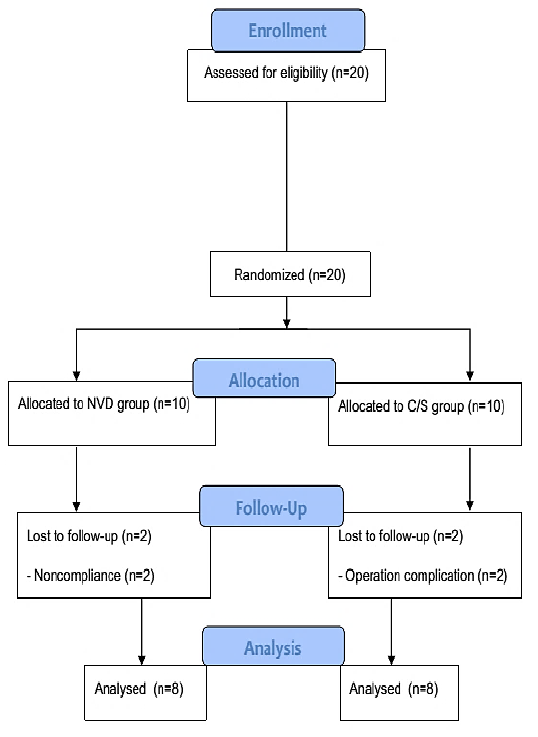
Two women refused participation in regular delivery group and were excluded because of noncompliance and lack of recording data. In the cesarean group, two women were excluded because of operation complication. Eight participates remained in each of the groups (Figure-1). The mean age of the subjects was 29.31±3.66 years. The mean maternal age, gestational age at delivery, a post-delivery day at study entry, parity, and previous breast-feeding experience were similar in participants. Also, 12.5% were lean individuals, 31.3% were with healthy BMI, 43.8%, and 12.5% were overweight and obese, respectively.
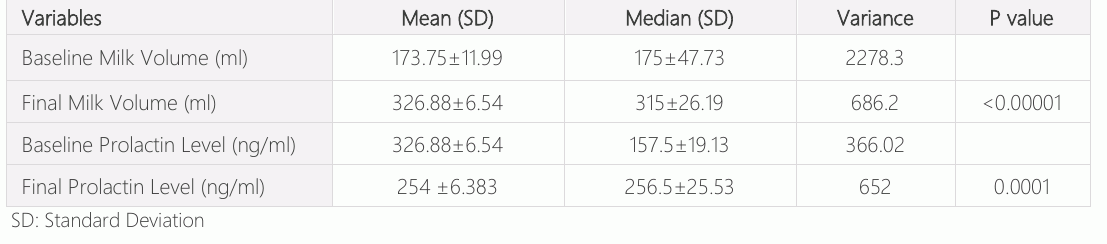
The mean volume of milk before treatment revealed 173.75±47.73 ml and the mean daily milk volume collected during seven days medication was 326.8±26.2 ml, with statistically significant increase of %88.13 and 153.13 ml (95%CI: 134.2-172.1; p<0.001) in mean daily milk production with domperidone treatment compared to the baseline (Table-1).
Also, the mean serum prolactin level was 161.19±19.13 and 254±25.53 ng/ml, before and five days after intervention respectively, that showed a significant increase of %57.57 and 92.8 ml (95%CI: 84.32-102.43; p=0.0001) compared to baseline (Table-1).
Women experienced a significant increase in milk volume after treatment than before (p< 0.001). There was a significantly higher rise in the serum prolactin levels after the treatment compared to before (p=0.0001).
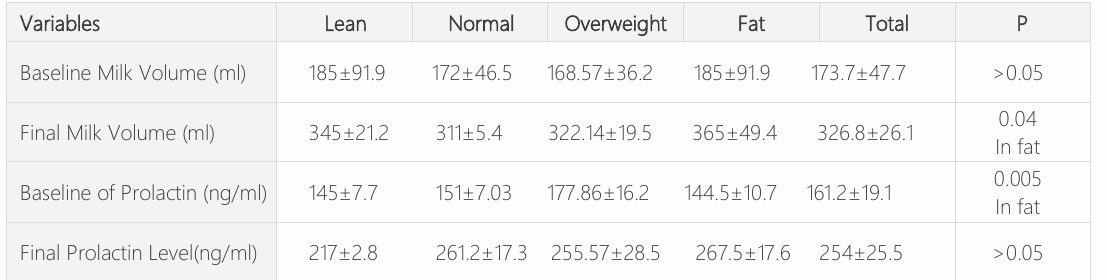
Our study showed that domperidone was a safe and effective medication in the short-term. Only one participant(6.3%) developed transient allergic skin reactions. There was no significant relationship between baseline milk volume (r= 0.302; p>0.05) and milk volume augmentation after medication (r=0.407; p>0.05) with the age of the women. There was no significant relationship between serum prolactin levels at baseline (r=0.418; p>0.05) and prolactin enhancement after medication (r=0.200; p> 0.05) with the age of the women. There was no relationship between mean milk volume before medication and BMI (p>0.05). But milk volume after treatment was significantly higher in fat women than the others that showed the medication was more effective in fat women (p=0.041; Table-2).
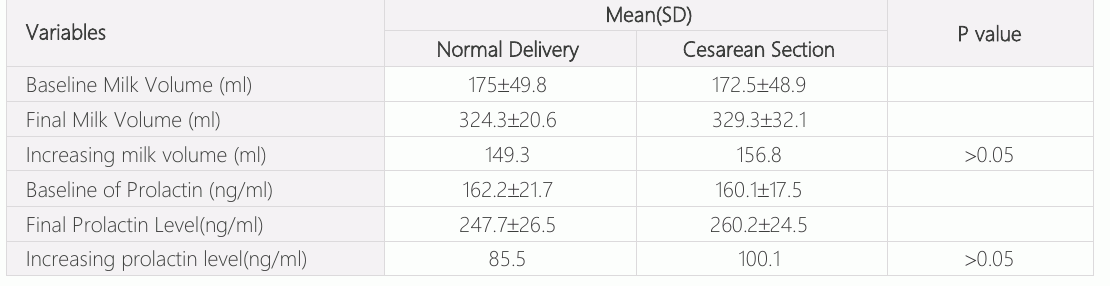
Mean serum prolactin level at baseline was significantly lower in fat patients before treatment (p=0.005). Mean prolactin level was higher after medication in fat women than the others, but the difference was not significant (p>0.05; Table-2). There was no association between milk volume increasing with the delivery method after medication, 324.3±20.6 vs 329.38±32.12 in a standard delivery and cesarean section respectively (p>0.05; Table-3). There was no relation between the rate of prolactin enhancement level after medication and the delivery method (247.7±26.5 vs 260.2 ±24.5 in natural and cesarean, respectively (p>0.05; Table-3).
Discussion
Metoclopramide, which is one of the central dopamine antagonist, has been the most widely studied in pharmacological interventions to augment lactation. However, it crosses the blood-brain barrier, is secreted in significant amounts in breast milk and has been reported to affect dopamine-mediated responses in offspring of nursing rats. Domperidone does not readily cross the blood-brain barrier. Primary studies suggest that domperidone may be useful in augmenting milk production in women with insufficient milk supply (15). Similar research in Thailand revealed that postpartum treatment with domperidone could significantly increase breast milk production after a full-term cesarean with minimal drug adverse effects (16). Asztalos et al. in 2012 reported that domperidone, through its pharmacologic action on increasing prolactin levels, will assist the mothers to have adequate breast milk production (26). A systematic review reported statistically significant relative increase of 74.72% in breast milk production following treatment with domperidone (27, 28). In a trial study, the mean increase in the volume of milk production during study days two to seven was significantly higher in the domperidone group than in the placebo (15).
In Campbell-Yeo et al. study, by day 14, breast milk volumes increased by 267% in the domperidone-treated group and by 18.5% in the placebo group (28). Da Silva et al. showed that the mean daily volume of milk collected during days 2-7 was 162.2 in the domperidone group and 56.1 mL in the placebo group. The mean increase was significantly higher in the domperidone group than placebo (15).
Our research reported that after seven-days medication with domperidone, the mean daily milk volume had increased by 326.88 mL compared to 173.75 mL/day of the baseline that the mean daily milk volume increased by 153.13ml and 88.13%. In the current study, increasing the mean amount of milk during seven days was similar to Osadchy et al. study, 88.13% vs 74.72% respectively (27).
In a similar study, by day five, there was a significant increase in the serum prolactin levels after receiving domperidone compared to baseline (15). Asztalos et al. in 2018 revealed that administration of 10 mg domperidone (thrice daily) for 14-days period could achieve to 50% increase in the milk volume of mothers (29). In the present study, the mean serum prolactin level was 161.1±19.1 and 254±25.5 ng/ml, before and five days after intervention, respectively, that showed a significant mean increase of %57.57 and 92.8 ml, compared to baseline.
In another study, Knoppert et al. evaluated the effects of 10 or 20 mg of domperidone three times a day for four weeks on 15 women with low milk production (30). Both groups experienced a significant increase in their milk production. However, there was a clinically significant difference between the two groups. On the other hands, women who received 20 mg three times daily of domperidone had the most massive increase in milk production (30). Maternal side effects of domperidone reported in galactagogue studies include dry mouth, headache, dizziness, nausea, abdominal cramping, and diarrhea that were more frequent with 60 mg than with 30 mg daily (16, 31–33). Drug withdrawal symptoms consisting of insomnia, anxiety, and tachycardia were reported in a woman taking 80 mg of domperidone daily for eight months as a galactagogue who abruptly tapered the dose over 3 days (34). Euprolactinemic galactorrhea secondary to domperidone is very rarely seen (35). Only minimal amounts of domperidone were into breast milk (less than 0.1% of maternal weight-adjusted dose), and side effects in breastfed infants have not been reported (36). Our study showed that domperidone is a safe medication in a short-term duration (seven days). Only one mother (6.3%) developed transient allergic skin reactions. No side effect was reported in any of the breastfed newborns. In similar researches, no significant adverse events were observed among mothers or infants, even for ten days of medication (15, 28, 29). Most breastfeeding experts agree that in a healthy mother without a history of cardiac disease, and in the absence of other drugs, which could interact with domperidone to prolong the QT interval, domperidone is safe to use for a short term, at the lowest effective dose and screening electrocardiogram is not recommended (37). In the present study, the mothers received domperidone tablet (10 mg orally 3 times daily) for 7 days.
The most published studies have used domperidone in a dosage of 10 mg three times daily for 4 to 10 days. Two small studies found no significant increase in milk production with a dosage of 20 mg three times daily compared to a dosage of 10 mg three times daily (32, 33), and that women who did not respond to the low dosage failed to return to the higher dosage (32). It would be unusual to use the medication for longer than a month, or at a higher dose. It will be more useful if started in the first 4-6 weeks (37). Dosages higher than 30 mg daily may increase the risk of arrhythmias and sudden cardiac death, although the risk is less because of their relatively younger age. Mothers should be advised to stop taking domperidone if they experience signs or symptoms of an abnormal heart rate or rhythm, including dizziness, palpitations, syncope, and seizures (37, 38). Domperidone could also be used for galactagogue, medications that aid in initiating, and maintaining adequate milk production to induce lactation among adoptive mothers (39).
There are some limitations to our study. Regarding the restriction on cost, we could not enroll a placebo group. Also, we determined the effect of domperidone for a short period. The low sample size was another limitation. Hence, we recommended future studies with more sample size and long-time treatment period as well as the considered the placebo group would be performed.
Conclusions
It may be concluded that domperidone would result in augmenting milk production among nursing mothers. There was no drug-related side effect for mothers and infants. Many questions should be answered before routinely domperidone recommendation. Effective dose and maximum permissible concentration of the drug should be determined for augmenting lactation, and drug side effects are necessary to compare with similar medications. A large multicenter trial and adequate sample size should be conducted to answer the questions.
Declarations
- Author contributions (CRediT)
- All authors contributed equally to all 14 CRediT roles (Conceptualization, Data curation, Formal analysis, Funding acquisition, Investigation, Methodology, Project administration, Resources, Software, Supervision, Validation, Visualization, Writing – original draft, Writing – review & editing).
- Funding
-
The authors declared that this study had received no financial support.
- Conflicts of interest
- The authors have declared that there is no conflict of interest for the present article.
- Ethics approval
- The pooled data were derived from a professional doctoral thesis on number 55151 (Approval Date: 10.05.2013, Approval Number: 13610101929082).
- Data availability
- A data availability statement was not reported in the published version of this article.
References (39)
28 of 39 references are linked to their DOI.
- Victora CG, Bahl R, Barros AJ, França GV, Horton S, Krasevec J, Murch S, Sankar MJ, Walker N, Rollins NC, Group TL. Breastfeeding in the 21st century: epidemiology, mechanisms, and lifelong effect. The Lancet. 2016:30;387 (10017):475-90 DOI Crossref PubMed Google Scholar
- Silvers KM, Frampton CM, Wickens K, Epton MJ, Pattemore PK, Ingham T, et al. Breastfeeding protects against adverse respiratory outcomes at 15 months of age. Matern Child Nutr 2009;5:243-50 DOI Crossref PubMed Google Scholar
- Bener A, Denic S, Galadari S. Longer breast-feeding and protection against childhood leukaemia and lymphomas. Eur J Cancer 2001; 37: 155-58 DOI Crossref PubMed Google Scholar
- Sudden Infant Death German Study Group. (2009) SIDS breastfeeding natural health. Available at: http://natural news.com/026239 SIDS breastfeeding natural health.html PubMed Google Scholar
- Labayen I, Ruiz JR, Ortega FB, Loit HM, Harro J, Villa I, et al. E xclusive breastfeeding duration and cardiorespiratory fitness in children and adolescents. Am J Clin Nutr 2012; 95:498-505 DOI Crossref PubMed Google Scholar
- Persson LA, Ivarsson A, Hernell O. Breast-feeding protects against Celiac disease. Am J Clin Nutr 2002; 75: 914-21 DOI Crossref PubMed Google Scholar
- Rao MR, Hedgier ML, Levine RJ, Naficy AB, Vik T. Effect of breastfeeding on cognitive development of infants born small for gestational age. Acta Paediatr 2002; 91: 267 -74 DOI Crossref PubMed Google Scholar
- Stuebe AM. Does breastfeeding prevent the metabolic syndrome, or does the metabolic syndrome prevent breastfeeding? Semin Perinatol 2015; 39: 290-295 DOI Crossref PubMed Google Scholar
- Anatolitou F. Human milk benefits and breastfeeding. Journal of Pediatric and Neonatal Individualized Medicine (JPNIM). 2012; 23;1(1):11-8 PubMed Google Scholar
- Gao Z, Wang R, Qin ZX, Dong A, Liu CB. Protective effect of breastfeeding against childhood leukemia in Zhejiang Province, PR China: a retrospective case-control study. Libyan Journal of Medicine. 2018;13(1):1508273 DOI Crossref PubMed Google Scholar
- Aguilar MC, González EJ, Álvarez JF, Padilla CL, Mur NV, García PL, et al. Breast feeding: an effective method to prevent breast cancer. Nutr Hosp 2010; 25: 954-58 PubMed Google Scholar
- Aslam M, Panjvani Z, Tarvij Eslami S, Nasserian H. An Experience with Induced Lactation in a nulliparous woman. Neonatal Intensive Care 2006; 19: 20-21 PubMed Google Scholar
- Bryant CA. Nursing the adopted infant. J Am Board Fam Med 2016; 19: 374-79 PubMed Google Scholar
- Hunegnaw MT, Gelaye KA, Ali BM. Factors associated with the time to cessation of breastfeeding among mothers who have index children aged two to three years in Debre Markos, northwest Ethiopia: a retrospective follow-up study. BMC pediatrics. 2018;18(1):77 Effect of Domperidone on Women Lactation Tarvij Eslami et al. DOI Crossref PubMed Google Scholar
- da Silva OP, Knoppert DC, Angelini MM, Forret PA. Effect of domperidone on milk production in mothers of premature newborns: a randomized, double-blind, placebo-controlled trial. CMAJ 2001; 164:17-21 PubMed Google Scholar
- Jantarasaengaram S, Sreewapa P. Effects of domperidone on augmentation of lactation following cesarean delivery at full term. Int J Gynaecol Obstet 2012; 116: 240-3 DOI Crossref PubMed Google Scholar
- Brogden RN, Carmine AA, Heel RC, Speight TM, Avery GS. Domperidone. A review of its pharmacological activity, pharmacokinetics and therapeutic efficacy in symptomatic treatment of chronic dyspepsia and as an antiemetic. Drugs 1982; 24: 360-400 PubMed Google Scholar
- Cnr Grattan St, Flemington Rd. Domperidone for increasing breast milk supply. June 2013. https://thewomens.r.worldssl. net/images/uploads/fact-sheets/Domperidone-for-increasin g-breast-milk-supply.pdf PubMed Google Scholar
- Van Noord C, Dieleman JP, van Herpen G, Verhamme K, Sturkenboom MC. Domperidone and ventricular arrhythmia or sudden cardiac death: a population -based case-control study in the Netherlands. Drug Safety 2010; 33: 1003–14 DOI Crossref PubMed Google Scholar
- Johannes CB, Varas-Lorenzo C, McQuay LJ, Midkiff KD, Fife D. Risk of serious ventricular arrhythmia and sudden cardiac death in a cohort of users of domperidone: a nested case-control study. Pharmacoepidemiology and Drug Safety 2010; 19: 881–8 DOI Crossref PubMed Google Scholar
- Djeddi D, Kongolo G, Lefaix C, Mounard J, Léké A. Effect of domperidone on QT interval in neonates. The Journal of Pediatrics 2008; 153: 663–6 DOI Crossref PubMed Google Scholar
- Günlemez A, Babaoğlu A, Arisoy AE, Türker G, Gökalp AS. Effect of domperidone on the QTc interval in premature infants. Journal of Perinatology 2010; 30: 50–3 DOI Crossref PubMed Google Scholar
- Yoshizato T, Kotegawa T, Imai H, Tsutsumi K, Imanaga J, Ohyama T, et al. Itraconazole and domperidone: a placebo-controlled drug interaction study. Eur J Clin Pharmacol 2012; 68: 1287–94 DOI Crossref PubMed Google Scholar
- Boyce MJ, Baisley KJ, Warrington SJ. Pharmacokineti c interaction between domperidone and ketoconazole leads to QT prolongation in healthy volunteers: a randomized, placebo-controlled, double-blind, crossover study. Br J Clin Pharmacol 2012; 73: 411–21 DOI Crossref PubMed Google Scholar
- Ung D, Parkman HP, Nagar S. Metabolic interactions between prokinetic agents domperidone and erythromycin: an in vitro analysis. Xenobiotica 2009; 39: 749–56 DOI Crossref PubMed Google Scholar
- Asztalos EV, Campbell-Yeo M, daSilva OP, Kiss A, Knoppert DC, Ito S. Enhancing breast milk production with Domperidone in mothers of preterm neonates (EMPOWER trial). BMC Pregnancy Childbirth 2012; 12: 87 DOI Crossref PubMed Google Scholar
- Osadchy A, Moretti ME, Koren G. Effect of domperidone on insufficient lactation in puerperal women: a systematic review and meta-analysis of randomized controlled trials. Obstet Gynecol Int; 2012; 10: 1155 DOI Crossref PubMed Google Scholar
- Campbell-Yeo ML, Allen AC, Joseph KS, Ledwidge JM, Caddell K, Allen VM, et al. Effect of domperidone on the composition of preterm human breast milk. Pediatrics 2010; 125: 107-14 DOI Crossref PubMed Google Scholar
- Asztalos EV, Kiss A, daSilva OP, Campbell-Yeo M, Ito S, Knoppert D, et al. Evaluating the Effect of a 14-Day Course of Domperidone on Breast Milk Production: A Per-Protocol Analysis from the EMPOWER Trial. Breastfeed Med. 2018;14 (2):102-7 DOI Crossref PubMed Google Scholar
- Knoppert DC, Page A, Warren J, Seabrook JA, Carr M, Angelini M, et al. The effect of two different domperidone dosages on maternal milk production. J Hum Lact 2013; 29: 38-44 DOI Crossref PubMed Google Scholar
- Wan EW, Davey K, Page-Sharp M, Hartmann PE, Simmer K, Ilett KF. Dose-effect study of domperidone as a galactagogue in preterm mothers with insufficient milk supply, and its transfer into milk. Br J Clin Pharmacol 2008; 66: 283-9 DOI Crossref PubMed Google Scholar
- Hale TW, Kendall-Tackett K, Cong Z. Domperidone versus metoclopramide: Self-reported side effects in a large sample of breastfeeding mothers who used these medications to increase milk production. Clinical Lactation. 2018;9(1):10-7 DOI Crossref PubMed Google Scholar
- Ingram J, Taylor H, Churchill C, Pike A, Greenwood R. Metoclopramide or domperidone for increasing maternal breast milk output: a randomised controlled trial. Arch Dis Child Fetal Neonatal Ed 2012; 97: 241-5 DOI Crossref PubMed Google Scholar
- Papastergiou J, Abdallah M, Tran A, Folkins C. Domperidone withdrawal in a breastfeeding woman. Can Pharm J (Ott) 2013; 146: 210-2 DOI Crossref PubMed Google Scholar
- Demir AM, Kuloglu Z, Berberoglu M, Kansu A. Euprolactine mic galactorrhea secondary to domperidone treatment. J Pediatr Endocrinol Metab 2015; 28: 955-6 DOI Crossref PubMed Google Scholar
- Bozzo p, Koren G, Ito S. Health Canada endorsed important safety information on domperidone maleate. Can Fam Physician 2012; 58: 952-953 PubMed Google Scholar
- Jansen K. Using domperidone to enhance lactation, The University of British Colombia; 2014. http://thischangedmy practice.com/domperidone-for-lactation/ PubMed Google Scholar
- Bozzo P, Koren G, Ito S. Health Canada advisory on domperidone: Should I avoid prescribing domperidone to women to increase milk production. Can Fam Physician 2012; 58: 952-3 PubMed Google Scholar
- Gabay MP. Galactogogues: medications that induce lactation. J Hum Lact 2002; 18: 274-9 DOI Crossref PubMed Google Scholar
Respond to this article
Comments on a published article are welcome as a Letter to the Editor.
Get an e-mail when new articles in your fields are published
Questions to the authors
Questions are moderated: an editor approves each question, the authors answer, and an editor approves the answer before both appear here.
No answered questions yet.
Ask the authors a question
Discussion
Comments are moderated: they appear after the writer confirms the e-mail address and an editor approves them. Each comment carries a conflict-of-interest statement.
No comments yet.
Write a comment
Read the full text
Open the PDF here
Loading the PDF…
If the PDF does not show here, use the download button above.
How to cite this article
TarvijEslami S, Nasirian H, Razavi AS, Arani HZ, Dareh M, Bikarannejad P, et al. Effect of Domperidone on Lactation in Low Milk Supply Women in Tehran, Iran. Ulutas Med J. 2019;5(3):175-183. doi:10.5455/umj.20190502070257
TarvijEslami, S., Nasirian, H., Razavi, A. S., Arani, H. Z., Dareh, M., Bikarannejad, P., Zivari, Y., Motevalli, M. S., Ahmadi, S. A., & Babakhani, E. (2019). Effect of Domperidone on Lactation in Low Milk Supply Women in Tehran, Iran. The Ulutas Medical Journal, 5(3), 175–183. https://doi.org/10.5455/umj.20190502070257
TarvijEslami, S. et al. (2019) 'Effect of Domperidone on Lactation in Low Milk Supply Women in Tehran, Iran', The Ulutas Medical Journal, 5(3), pp. 175–183. doi: 10.5455/umj.20190502070257.
@article{umj46759,
  title = {Effect of Domperidone on Lactation in Low Milk Supply Women in Tehran, Iran},
  author = {TarvijEslami, Saeedeh and Nasirian, Hosain and Razavi, Arezoo Sadat and Arani, Hamid Zaferani and Dareh, Mahshid and Bikarannejad, Poorya and Zivari, Yasamin and Motevalli, Maryam Sadat and Ahmadi, Seyed Amirhossein and Babakhani, Elnaz},
  journal = {The Ulutas Medical Journal},
  year = {2019},
  volume = {5},
  number = {3},
  pages = {175--183},
  doi = {10.5455/umj.20190502070257},
  url = {https://www.ulutasmedicaljournal.com/?mno=46759},
  issn = {2149-388X}
}