The Ulutas Medical Journal · ISSN 2149-0430 (print), 2149-388X (online) · https://www.ulutasmedicaljournal.com/?mno=60934
Original Article · Open access
Profile of Patients at a State-Run Tertiary Cancer Hospital in India: An Audit
Also available in: العربية · Türkçe · 中文
Abstract
- Introduction
- Decreased cancer survival in developing countries is attributed to the advanced stage at diagnosis, limited access to cancer care and unaffordability of treatment. Delhi Government set up a tertiary level cancer center in the capital of India where world-class tertiary level care is offered no cost. The present study was undertaken to assess the patient demographics of the hospital and descriptive statistics evaluated to arrive at better measures for patient treatment.
- Materials and methods
- This is a retrospective study of all the patients registered in the Hospital in 2014. Information on socio-demographic, diagnosis, dietary details at the time of registration followed by the clinical extent of the disease and stage was analyzed.
- Results
- A total of 6900 patients registered at the hospital in 2014. 3687 patients were found to be eligible to be included in the study. The highest number of cancer cases seen in the adult age group of 21-65 years (2717, 70%). Carcinoma breast in females (424, 11%) followed by carcinoma cervix (235, 6.4%) and in males. Head and neck cancers (928, 84%) followed by carcinoma lung (226, 82%) were common. Most common metastatic cancer at presentation was hepatobiliary (182, 64%) followed by lung (173, 63%).
- Conclusion
- 21-65 years was the most common age group for all cancers with breast cancer in females and head neck cancers in males being the commonest cancers. Hepatobiliary and lung cancers behave aggressively and are frequently metastatic at the presentation in Delhi and Northern India.
Keywords
Full text
Introduction
The International Agency for Research on Cancer GLOBOCAN project has predicted that India’s cancer burden will nearly double in the next 20 years, from slightly over a million new cases in 2012 to more than 1.7 million by 2035(1). The number of deaths due to cancer is expected to rise from 680,000 in 2012 to 1.2 million in 2035 years (1). A decreased survival in developing countries is likely due to a combination of advanced stage at diagnosis, limited access to quality cancer care and the inability of patients to afford optimum treatment (2). NCCP first came into existence in 1975 to facilitate better management of cancer treatment by way of improving infrastructure for the cancer treatment facilities at existing Government or autonomous hospitals (3). Development of oncology wings in existing medical college hospitals, establishment and support of the regional cancer centers and establishment of dedicated tertiary level cancer care centers across several states have been the main areas of thrust (3). Similar efforts to reinforce the medical colleges with separate oncology wing have been expounded by State Governments as well. In a first, the Delhi Government set up a tertiary level cancer center in the capital of India, where world-class tertiary level care is offered to the cancer patients at no cost (4). This includes all expenditures from investigations to surgery, radiation therapy and chemotherapy. Since its inception in 2006 and fully functioning in 2011, there has been an increase in the patient inflow.
India does not have an established national registry exists that provides overall cancer incidence or mortality data. However, the National Cancer Registry Programme (NCRP, established by the Indian Council of Medical Research in 1981) provides population-based data from a selected network of 28 cancer registries located across the country (5). It is crucial to create and analyze the cancer patient population as it aims to provide a research base for developing appropriate strategies to aid in the National Cancer Control Programme (NCCP). It would encompass within its purview the planning, monitoring and evaluation of related activities under NCCP (5). This data is useful in assessing the appropriateness of services provided by the government, the utilization of resources and yield in terms of cure, the lacunae in services provided and any additional measures that may be required to cater to the cancer patients of the country. It provides an overview of the cancer awareness in the community and additional measures required for appropriate management of cancer patients at all levels of care.
The purpose of a cancer registry program is to collect data regarding the patient’s name with unique identification number (UID to avoid repetition), age, gender, etiology, geographical distributions, type of cancer, site of cancer, grading and staging of cancer (to evaluate degree of invasion and metastasis), management, morbidity and mortality.
The audits are a smart way of assessing the profile of patients presenting to a hospital and analyze its preparedness in terms of infrastructure and human resources to treat them successfully. Apart from these, treatment protocols also need to be sculpted according to the needs of the patients, workforce training to handle emergencies in particular age groups need to be defined. In the case of a younger cohort of cancer patients, more aggressive cancer regimens may be framed to provide a maximum chance of cure to these patients. The Delhi State Cancer Institute, Delhi as stated elsewhere was set-up by the Government of National Capital Territory, Delhi for providing tertiary level care to the needy patients for free (4). With the rapidly growing patient numbers each year and increased advanced-stage disease at the presentation, it became incumbent to study the demographics of patients presenting to the hospital and whether the goal of achieving cure in these patients was being fulfilled. To answer many such questions, the present retrospective study was undertaken to assess the number of patients registering at the hospital and the descriptive statistics evaluated to arrive at better measures for patient treatment and outcomes.
Material and Methods
This is a retrospective study of all the patients registered in the Hospital registration system from 1st January 2014 to 31 December 2014. There is a pre-devised software questionnaire that records on socio-demographic, diagnosis, dietary details at the time of registration followed by the clinical extent of the disease, stage, treatment, prognosis of the disease etc. as manually recorded in the case records by the clinicians.
The International Classification of Disease (ICD) topography codes (ICD10: C00–C99) are used for classification of cancer diseases by using the Manual of International Statistical Classification of Disease and Related Health Problems (10th revision) published by the World Health Organization (6). A permission for research work was taken from concerned institutional concerned authorities.
Statistical Analysis
Collected data were entered in MS Excel, and results generated were analyzed. Descriptive statistical measures such as percentage, mean, and standard deviation were applied.
Results
A total of 6900 patients were registered at the hospital between 1st January 2014 and 31st December 2014. Of these 2657 patients were enrolled as screening patients, and 4243 patients were registered as confirmed cases of cancer having an established diagnosis of cancer. All the data was thoroughly checked for repetitions and eligibility for the diagnosis of cancer. Patients having multiple cancers were counted as a single entry.
Three thousand six hundred eighty-seven patients were found to be eligible to be included in the study with complete data entry. The limitation of this study is where the data regarding the number of patients of the screening category converting to confirmed cancer are not documented. Out of 3687 analyzable patients, 1540(41%) were females, and 2147(49%) were males. Vegan population was 75%(2779) as compared to non-vegan eating, who was 25%(908). There were 7% (247) unmarried patients as against 93% (3440) married individuals. The food habits and marital status were recorded to ascertain contribution of factors in the development of cancer.
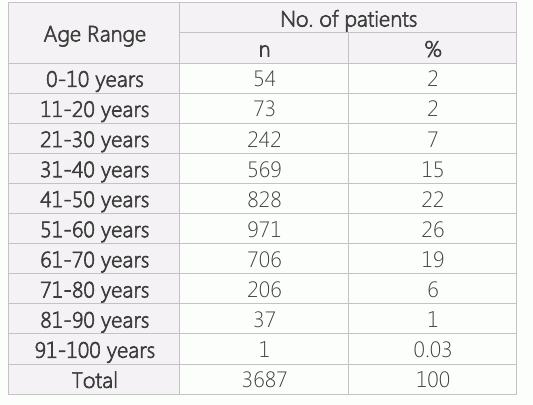
As depicted in Table-1, there was a gradually increasing age-specific incidence of cancers with the highest in the age group of 51-60 years having 26%(971). For statistical analysis, the age groups were divided into pediatrics (01-20), Adult (21-65 years) and geriatric (>65 years). The highest no of cancer cases seen in the adult age group of 21-65 (2717;70%),>65 (843; 21%) and only 9% cases in pediatric age (Table-2). Majority of the patients coming to the hospital were from the neighboring state of Uttar Pradesh (2001; 54%) followed by Delhi (1170, 22%) as seen in Table-3. This indicates the geographical proximity of the hospital to the surrounding areas of Uttar Pradesh along with the lack of cancer care facilities in the state of Uttar Pradesh that draws such patients in the lure of free treatment to the hospital (7).
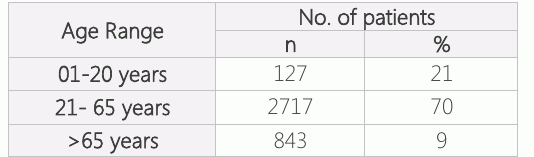
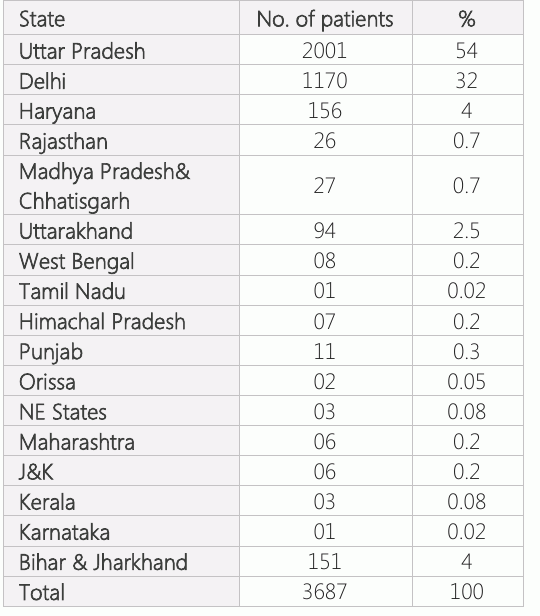
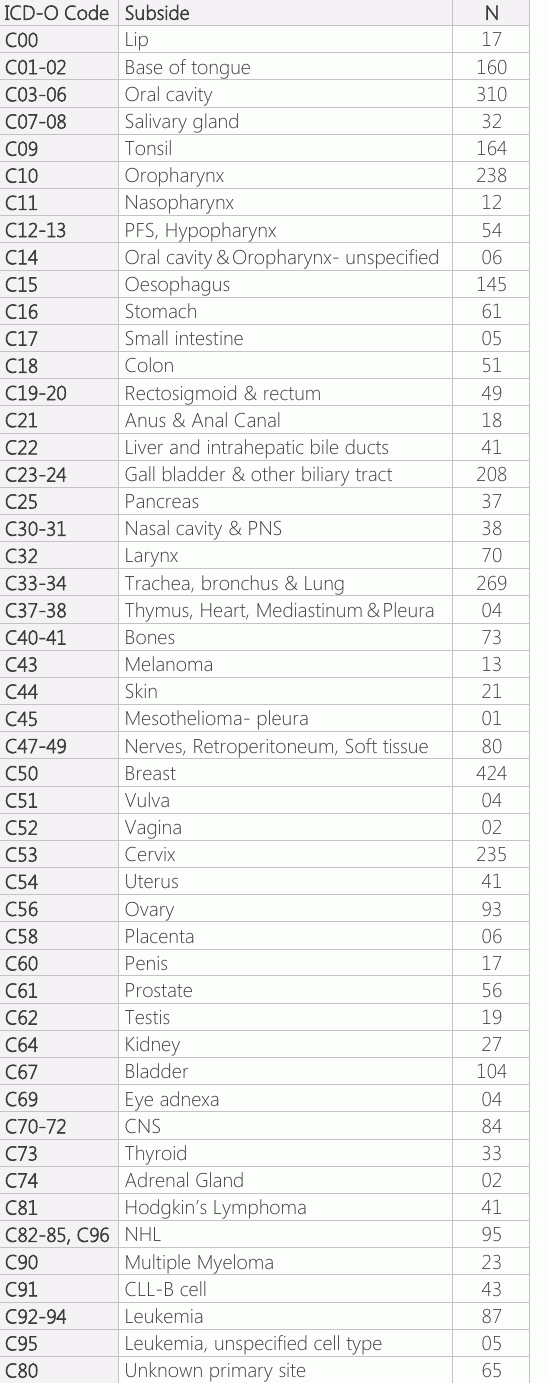
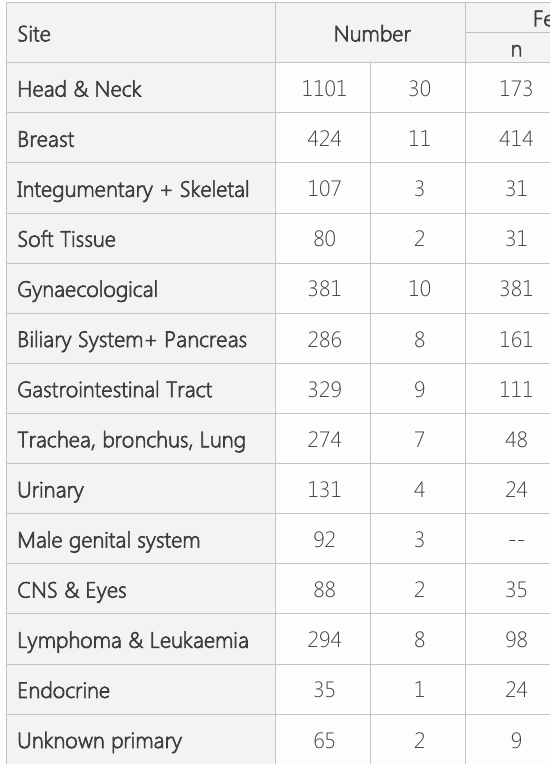
Table-4 shows the maximum number of carcinoma breast in females (424;11%) followed by carcinoma cervix (235; 6.4%). In males, the maximum number is seen in Head and neck cancers (928; 84%) followed by carcinoma lung (226; 82%). Amongst head and neck cancers, the most common sites are the oral cavity (310, 8.4%) and oropharyngeal (238; 6.4%) cancers. The cases of intrahepatic/bile duct cancer and gall bladder cancer together constitute 6.75% (249) of all patients. Amongst GI cancers, oesophagus cancersarethemostcommon(145) with almost double the incidence as carcinoma stomach. Haematology malignancies together constitute 8%(294) of all malignancies. Prostate cancer accounted for 1.5% (56) of all cancers. Demographic characteristics were tabulated broadly according to sex distribution and metastatic disease at presentation. As shown in Table-5, 22% (812) of all cases were metastatic at presentation. The most common metastatic cancer at presentation was hepatobiliary (182; 64%) followed by lung (173; 63%) and breast cancers come close third (115; 27%). Only 18 (28%) patients of PUO were metastatic at presentation. Seventy-one (19%) patients of gynaecological cancers were metastatic at presentation.
Discussion
In India, cancer of oral cavity, oropharynx, lung and oesophagus are frequent in males and cancers of cervix, breast, oral cavity, oropharynx and ovary are common in females (8). Current trends suggest that total cancer burden in India for all sites of cancer is likely to double by 2026 due to increasing life expectancy, greater exposure to the environmental carcinogens, continued use of tobacco, deteriorating lifestyle and viral etiology. In men in India, the more common cancers are tobacco-related (5). In our study, we find that 84% of head and neck cancers are seen in men. The oropharyngeal cancers are the most common amongst head and neck cancers, followed by oral cavity cancers. Chewing or smoking tobacco is the most cited risk factor in leading to increased incidence of this site. Similarly, lung cancers are the second most common cancers seen in our audit in males secondary to the previously mentioned probable causal factors. In women, carcinoma cervix is a common gynaecological cancer seen in India (5). In our study, the most common gynaecological cancer in women is cancer cervix (235/381). Cancer cervix is seen mostly in a lower socioeconomic strata of society, and the same is corroborated in our study as well since the patients presenting to our institute belonged to lower socioeconomic class. The causal risk factors are poor genital hygiene, HPV infection and early age of marriage in this economic strata, which is quite prevalent in India. In a study by Ali et al. (2011), cervical cancer was the second most common cancer in Delhi after lung cancer overall (9). In our study, breast cancer is the most common cancer in females, followed closely by cervical cancer. The lifestyle factors largely modifiable like tobacco consumption, obesity, hormonal contraceptives, increasing trend of null parity are few factors that have increased incidence of breast cancer in the Indian urban population (10). In this analysis, carcinoma breast was the most common cancer seen in women, almost double than cervical cancer cases.
Malhotra et. Al (2017) reported 6% incidence of gall bladder cancer in Delhi (11). In our study, the gall bladder incidence is around 6.4% and is in sync with the published data. The reason for this is the high rate of cholelithiasis seen in the Indo-Gangetic belt (12). The endocrine tumors comprise ~2% of all malignancies having a prevalence of <200,000 in the United States that makes it an orphan disease (13). The patients presenting with endocrine tumors at the center - of the total 35 patients (0.9%), 24 were females and 11 males. Majority of these endocrine cancers were neuroendocrine - a rare form of slow-growing cancer that has reasonable control by immunotherapy (13). Since in the hospital, these drugs were being supplied for free, patients who were taking primary treatment from other private hospitals also enrolled themselves in the hospital to get free drug access by giving wrong information about the income profile. The proportion of cases metastatic at presentation is 22%, which is much higher than the average mortality rate from cancer in India (14). This is likely because many patients received treatment elsewhere and presented in the metastatic stage. This may not be the exact representation of metastatic cases. The follow-up data is inconsistent as many patients are lost to follow-up since they come from neighboring states; therefore, mortality statistics could not be ascertained in this study. The volume of patients since the functioning of the hospital started peaked in the year 2014 and ever since there has been a steady rise in new registrations. The limitation of this audit is the misrepresentation of income profile by the patients to gain free diagnosis and treatment. The data recording in the patient files is incomplete, and the primary reason is the lack of adequate staff in comparison to the number of patients in the outpatient department. This audit was done to look at the demographics of the patients presenting at the institute, how well the benefit of tertiary level cancer care being provided at no cost is percolating to the intended socioeconomic strata and the measures that can be adopted for optimum benefit.
Few essential lessons are learnt from this audit and measures to rectify them have to be taken up by the hospital administration. The registration staff needs to be trained in taking the personal details, and a section for previous treatment in a hospital needs to be included in the records. Tertiary level care free of cost is the ideal goal for healthcare across the world. However, increasing cost is a deterrent and almost all state-run hospitals, even in developed nations, charge asubsidized amount for treatment. This initiative by Government of NCT, Delhi, India, is unique given the increasing incidence of cancer in India and is a great example to be followed by other states. In NCT of Delhi, there is a similar Institute in West of Delhi State, and there is a vision of establishing one such center in every corner of the State. The skilled workforce required for the smooth functioning of these centers need to be hired, and care needs to be taken to maintain the vision and mission behind setting up this unique model of tertiary level cancer care facility in the Delhi- the national capital of India.
Conclusion
While the demographics of cancer patients presenting in the institute is representative of the country demographics, still the number of metastatic cases presenting at the institute is higher. The reason behind is that most patients are either diagnosed late or report to the hospital when they have exhausted their finances after taking treatment at private/corporate hospitals and require free of cost treatment. The present audit has highlighted that the age group having the highest cancer incidence is between 21-65 years of age. Breast cancer is the most common cancer in females, whereas in males, head and neck cancers are the most common. Hepatobiliary cancers are frequently metastatic at presentation, especially in Delhi and Northern India due to which the mortality rates are high in these cancers. It is imperative on the part of policymakers to take adequate steps to prepare the system to effectively manage the cancers afflicting the relatively younger population in India.
Declarations
- Author contributions (CRediT)
- All authors contributed equally to all 14 CRediT roles (Conceptualization, Data curation, Formal analysis, Funding acquisition, Investigation, Methodology, Project administration, Resources, Software, Supervision, Validation, Visualization, Writing – original draft, Writing – review & editing).
- Funding
-
Funding information was not reported in the published version of this article.
- Conflicts of interest
- The author has declared no conflict of interest for the present article.
- Ethics approval
- Ethics approval details were not reported in the published version of this article.
- Data availability
- A data availability statement was not reported in the published version of this article.
References (14)
7 of 14 references are linked to their DOI.
- Ferlay J, Soerjomataram I, Ervik M, et al. GLOBOCAN 2012 v1.0, Cancer Incidence and Mortality Worldwide: IARC Cancer Base No. 11. Lyon, France: International Agency for Research on Cancer, 2013. Available from: http://globocan. iarc.fr PubMed Google Scholar
- Pramesh CS, Badwe RA, Sinha RK. The National Cancer Grid of India. Indian J Med Paediatr Oncol. v.35(3); Jul-Sep 2014 DOI Crossref PubMed Google Scholar
- Mohfw.gov.in [Internet]. India: Ministry of Health and Family Welfare; c2019 [cited 2019 July 4]. Available from: https:// mohfw.gov.in/sites/default/files/1493693747note_0.pdf PubMed Google Scholar
- Dsci.nic.in [Internet]. India: Delhi State cancer institutes; c2019 [cited 2019 July 4]. Available from: http://www.dsci. nic.in/home.html PubMed Google Scholar
- Mallath MK, Taylor DG, Badwe RA. The growing burden of cancer in India: epidemiology and social context. Cancer burden and health systems in India 1. Lancet Oncol 2014; 15: e205–12 DOI Crossref PubMed Google Scholar
- Who.int [Internet]. Geneva: World Health Organization, International; c2019 [cited 2019 Aug 7]. Available from: https://www.who.int/classifications/icd/ICD10Volume2_en_2 010.pdf PubMed Google Scholar
- Cancerindia.org [Internet]. India: Cancer India; c2019 [cited 2019 Aug 7]. Available from: http://cancerindia.org.in/uttar-pradesh.html PubMed Google Scholar
- WHO (2010): Health situation in the South East Asia Region 1994-1997, Regional office of SEAR, New Delhi. Available from:http://www.searo.who.int/india/topics/cancer/Cancer_f act_sheet.pdf PubMed Google Scholar
- Ali I, Wani WA, Saleem K. Cancer Scenario in India with Future Perspectives. Cancer Therapy Vol 8, 56-70 PubMed Google Scholar
- Gupta A, Sridhar K, Dhillon PK. A review of breast cancer awareness among women in India: Cancer literate or awareness deficit? Eur J Cancer. 2015 Sep; 51(14): 2058– DOI Crossref PubMed Google Scholar
- Malhotra RK, Manoharan N, Shukla NK, Rath GK. Gallbladder cancer incidence in Delhi urban: A 25-year trend analysis. Indian J Cancer. 2017;54:673-7 DOI Crossref PubMed Google Scholar
- Unisa S, Jagannath P, Dhir V et. al. Population-based study to estimate prevalence and determine risk factors of Profile of Patients at a Cancer Hospital in India Meena Tiwari gallbladder diseases in the rural Gangetic basin of North India. HPB (Oxford). 2011 Feb;13(2):117-25 DOI Crossref PubMed Google Scholar
- Basu B, Sirohi B, Corrie P. Systemic therap y for neuro endocrine tumours of gastroenteropancreatic origin. Endocr Relat Cancer. 2010;17(1):R75–90 DOI Crossref PubMed Google Scholar
- Bray F, Ferlay J, Soerjomataram I, Seigel RL, Torre LA, Jemal A. Global Cancer Statistics 2018: GLOBOCAN Estimates of Incidence and Mortality Worldwide for 36 Cancers in 185 Countries. Ca Cancer J Clin 2018;68:394–424 DOI Crossref PubMed Google Scholar
Respond to this article
Comments on a published article are welcome as a Letter to the Editor.
Get an e-mail when new articles in your fields are published
Questions to the authors
Questions are moderated: an editor approves each question, the authors answer, and an editor approves the answer before both appear here.
No answered questions yet.
Ask the authors a question
Discussion
Comments are moderated: they appear after the writer confirms the e-mail address and an editor approves them. Each comment carries a conflict-of-interest statement.
No comments yet.
Write a comment
Read the full text
Open the PDF here
Loading the PDF…
If the PDF does not show here, use the download button above.
How to cite this article
Tiwari M. Profile of Patients at a State-Run Tertiary Cancer Hospital in India: An Audit. Ulutas Med J. 2019;5(3):194-201. doi:10.5455/umj.20190810072052
Tiwari, M. (2019). Profile of Patients at a State-Run Tertiary Cancer Hospital in India: An Audit. The Ulutas Medical Journal, 5(3), 194–201. https://doi.org/10.5455/umj.20190810072052
Tiwari, M. (2019) 'Profile of Patients at a State-Run Tertiary Cancer Hospital in India: An Audit', The Ulutas Medical Journal, 5(3), pp. 194–201. doi: 10.5455/umj.20190810072052.
@article{umj60934,
  title = {Profile of Patients at a State-Run Tertiary Cancer Hospital in India: An Audit},
  author = {Tiwari, Meena},
  journal = {The Ulutas Medical Journal},
  year = {2019},
  volume = {5},
  number = {3},
  pages = {194--201},
  doi = {10.5455/umj.20190810072052},
  url = {https://www.ulutasmedicaljournal.com/?mno=60934},
  issn = {2149-388X}
}