The Ulutas Medical Journal · ISSN 2149-0430 (print), 2149-388X (online) · https://www.ulutasmedicaljournal.com/?mno=114079
Original Article · Open access
Female Gender and Polypharmacy Results in An Increased Risk of High-Energy Trauma Associated With Falls in Elderly People
Also available in: العربية · Türkçe · 中文
- Istanbul American Hospital, Department of Internal Medicine, Istanbul, Turkey ROR
- Department of Nutrition and Dietetics, Kirklareli University Health School, Kırklareli, Turkey ROR
- Department of Thoracic Surgery Consultant, Istanbul American Hospital, Istanbul, Turkey ROR
Abstract
- Introduction
- Falls represent a major clinical problem in the elderly population. Accordingly, the prevention of falls is clinically important in this vulnerable population. The aim of the present study was to evaluate the clinical characteristics associated with falls and to define a patient subgroup that is at increased risk.
- Materials and Methods
- Consecutive patients aged ≥65 years, who presented with falls at the Emergency Department of American Hospital, Istanbul, Turkey, from 01/02/2014 to 01/02/2015, were included in this cross-sectional study.
- Results
- A total of 166 (17%) patients met the study inclusion criteria, comprising 110 (57.2%) females and 56 (33.7%) males. The mean age was 86.2±7.6 (66-105) years. The incidence of high-energy trauma was significantly higher in individuals aged >80 years (t=6.71; p=0.0054). Female gender was associated with an increased risk of high-energy trauma (x²≤9.51; p=0.003). The frequency of angiotensin-converting enzyme inhibitors and polypharmacy was significantly higher in the high energy trauma group (p<0.001).
- Conclusion
- Women aged >80 years are at an increased risk of falls. Moreover, polypharmacy is associated with falls that lead to high-energy trauma. Healthcare providers should pay particular attention to this patient group to prevent high-energy falls that may lead to temporary or permanent injuries.
Keywords
Full text
Introduction
The life expectancy of the world’s population has markedly increased over recent decades. Therefore, the proportion of elderly people in populations has increased. In 2000, there were 605 million people aged ≥60 years worldwide; however, this number is estimated to reach 2 billion in 2050 (1). In accordance with the World Health Organization definition of “elderly,” which includes individuals with a chronological age of ≥60 years, the majority of developed countries and geriatric sciences have adopted the threshold of 60 years of age (2). Among many other age-related diseases, falls represent a major clinical problem in this population of individuals, with millions of older adults suffering falls every year.
The incidence of falls among elderly population living in the community is approximately 30- 40%; however, this number may reach up to 60% for those living in nursing homes, i.e., almost twice the incidence of falls among the elderly living in the community (3, 4). Falls may lead to temporary and permanent deficits requiring frequent hospitalizations, thereby increasing the burden on healthcare systems. Fractures, such as hip fractures, are the most common and most expensive non-fatal injuries associated with falls.Moreover, fractures account for 61% of all non-fatal costs, despite comprising only a third of non-fatal injuries (5). In addition to temporary injuries, falls may cause permanent disability and even death. The injuries to internal organs are responsible for almost 28% of fall deaths and account for 29% of costs (6). Accordingly, the prevention of falls in clinically important is this high-risk group of individuals.
Risk factors should be identified and eliminated to prevent falls. Certain factors, such as gait disorders, depression, female gender, arthritis, the use of assistive devices and a history of stroke, incontinence, orthostatic hypotension, visual disorders, muscle weakness, as well as the use of medications for concurrent diseases, in addition to polypharmacy (i.e., the concurrent use of ≥4 drugs) have been shown to predispose elderly individuals to falls (7–9). Pharmacological agents that may increase the risk of falls include neuroleptics, benzo diazepines, tricyclic antidepressants, serotonin uptake inhibitors, antiepileptics, Class 1A anti-arrythmics, diuretics and digoxin (10, 11).
The present study aims to evaluate the clinical characteristics associated with falls and to define a patient subgroup that is at increased risk.
Materials and Methods
Consecutive patients aged≥65 years, who presented with falls at Emergency Department of American Hospital, Istanbul, Turkey, from 01/02/2014 to 01/02/2015, were included in this retrospective study. Ethical Committee permission was obtained from the local ethics committee (Protocol date and number: 12.01. 2015/2015.011.IRB2.005). A fall was defined as an event resulting in an individual suddenly and inadvertently coming to rest on the ground or a lower position. Medical records of included patients were retrieved from the archives and analysed. All falls, regardless of setting, were included in the present study. Analysed data included the demographic and health characteristics of patients, such as age, gender, concomitant diseases and medications. The residential status of patients, such living alone in their own home, with others or in a residential home, was recorded from the files.
High energy trauma (HET) was defined as trauma caused by a fall, which resulted in brain injuries, cervical fracture, thoracic trauma, abdominal trauma, lower extremity fractures or dislocations, facial fractures, aortic rupture, diaphragmatic rupture, spleen and liver rupture or pelvic and acetabular fractures (12). Low energy trauma (LET) was defined as a trauma, which resulted in minor injuries other than HET. Recurrent falls were defined as >2 falls within the last 6 months. The index event was defined as the fall leading to hospital admission. Patients were assigned to two groups as HET (Group 1) or LET (Group 2). The exclusion criteria of the present study were as follows: falls related to being pulled or pushed; any medical condition that may predispose to falls, such as myocardial infarction or ischemia, cognitive impairment; stroke or neurological impairment, the being bedridden and visual impairment; alcohol intoxication or gastro intestinal bleeding.
The impact of variables on falls was analysed using Pearson Chi-square and Student's t-test. Further analyses were performed using Pearson Chi-square, the one-way analysis of variance (ANOVA), post-hoc analysis and Tukey’s honest significant difference method. The impact of gender on the evaluation of falls was assessed using Pearson Chi-square and Student's t-test. The effect of retirement duration was evaluated using Pearson Chi-square, ANOVA and post-hoc analysis.
Results
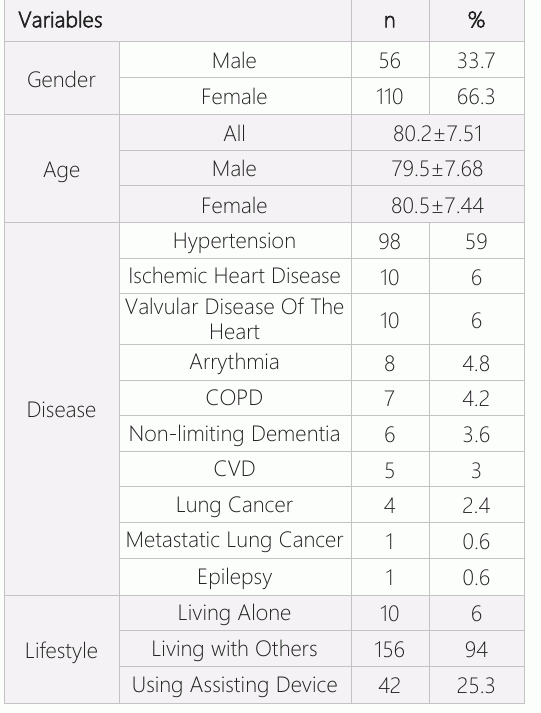
A total of 976 patients with falls were admitted to the emergency department of the hospital during the study period. There were 166 (17%) patients aged >65 years who met the inclusion criteria. Of the 166 patients, 110 (66.3%) were female and 56 (33.7%) were male. The mean age of included patients was 86.2±7.6 (66–105) years. There were 98 (59%) patients with hyper tension, 10 (6%) with ischemic heart disease, 10 (6%) with valvular heart diseases, 8 (4.8%) with arrhythmia, 7 (4.2%) with chronic obstructive pulmonary disease, 6 (3.6%) with non-limiting dementia, 5 (3%) patients with cerebrovascular disease, 4 (2.4%) with lung cancer, 1 (0.6%) with metastatic lung cancer and 1 (0.6%) with epilepsy. The demographics of the patients are shown in Table 1.
All patients lived in their own homes, and no patients lived in a nursing home. Ten (6%) patients lived alone and 156 (94%) patients lived with others. There were 42(25.3%) patients who used assistive devices to stand and walk. Group 1 included 67 (40.3%) patients, whereas Group 2 included 99 (59.7%) patients. Elderly individuals aged >80 years were more likely to suffer from HET related to falls. There were 87 (52.4%) patients aged <80 years and 79 (47.6%) aged ≥80 years (x²=9.48; p=0.00001). The incidence of HET was significantly higher in individuals aged ≥80 years (t=6.71; p=0.0054). A strong significant association (p=0.003) was observed between gender and trauma energy. There were 24(14.4%) male and 43(26%) female patients who suffered from HET, and there were 32 (19.3%) male and 67 (40.3%) female patients who suffered from LET. HET risk was increased in the female gender (x(2)=9.51; p=0.003).
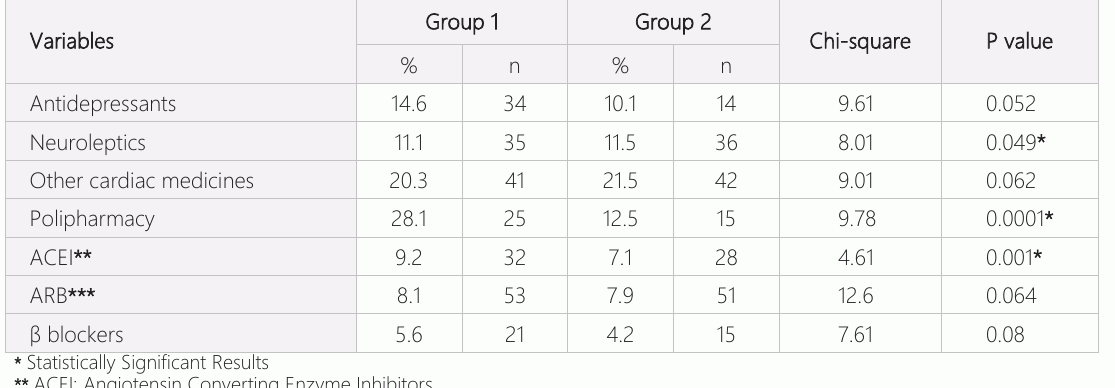
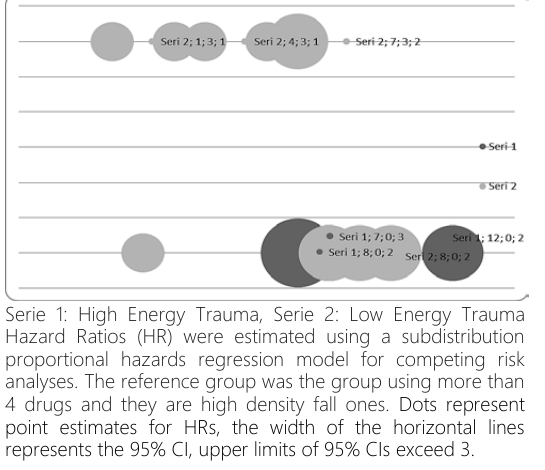
The use of neuroleptic drugs was significantly higher in Group 2, whilst the use of angiotensin converting enzyme inhibitors (ACEI) and poly pharmacy was significantly higher in Group 1. The rates of drug use are shown in Table 2. There were 76(58%) patients who had recurrent falls. The remaining 99 (42%) patients had no history of falls. The incidence of falls was significantly higher in patients with a history of falls (x²=3.91, p=0.021). Multilogistic regression analysis identified gender as the only significant risk factor for falls. The risk of falls was five times higher in females than in males (odds ratio, 5.18; 95% confidence interval, 1.1–15; Figure 1). In addition, patients with HET were three times more likely to suffer subsequent falls than those with LET (95% confidence interval, 0.96–4.7).
Discussion
The resent cross-sectional study found that the prevalence of falls in elderly people aged ≥65 years was 34.8% per year. American Hospital is a private hospital in the city centre of Istanbul with 340 beds. Majority of the patients have middle to high level income, but emergency department welcomes all patients regardless of their economic status, as in Turkey all emergency services are free according to the law. Therefore; we think that this rate reflects the general patient population. This rate is in accordance with the prevalence rates reported by previous studies (13, 14). The incidence of falls is known to be higher among individuals living in nursing homes. We are unable to assess the effect of living in a nursing home as subjects included in the present study lived independently at their own home or with relatives.
The results of the present study demonstrated that the risk of falls was highest in people aged ≥80 years. Moreover, the results demonstrated an association between female gender and falls. The incidence of falls was significantly higher in females than in males. This finding corroborates previous reports(15–19), Stevens etal.(5) showed that women are more likely than men to be treated for fall injuries in hospitals and emergency departments. Aoyama et al. (17) noticed that women had a higher risk of falling than men. They showed that Motor Fitness Scale may be a significant predictor of falls in older women, Campbell and Robbins submit that there are various intrinsic factors that make women more prone to falls than men. These factors are osteoporosis, self confidence on falling, lower muscle strengh and worse physical performances.
An isolated fall is not always regarded as a sign of major disease or as an increased risk of subsequent falls. However, recurrent falls, defined as >2 falls in the preceding 6 months, is a well-known risk factor. We also observed an increased risk of falls in elderly individuals who had previously fallen more than once. Moreover, this risk was apparently higher in patients with falls resulting in HET (20–25). In our study population, the risk of a subsequent fall was significantly higher in the 67 elderly individuals who had suffered HET related to falls within the last 6 months prior to admission. Hence, we believe that the caregivers at nursing homes should be aware of the increased risk of falls in this population of individuals.
Similarly to many countries, life expectancy in Turkey has also noticeably increased. The expected life span is currently 73.7 years for men, 79.4 years for women and 76.3 years overall (26). An increased life span has led to a higher percentage of elderly individuals in the community and greater numbers of individuals receiving various kinds of medication due to the increased survival among patients with chronic diseases. Thus, the number and duration of pharmacotherapy and concomitant diseases in elderly individuals have concurrently increased. It is estimated that being maintained on one or more medications is a risk factor for falls in the elderly population. Polypharmacy, defined as the use of ≥4 drugs, is accepted as a risk factor for falls (27, 28). The present study also found an association between pharmacotherapy and the frequency of falls, with the risk of recurrent falls found to be higher in poly pharmacy. This result confirms that polypharmacy is associated with the risk of falls in this frail population. Nevertheless, drug classes that are associated with falls in the elderly patients remain contro versial. The results of the study indicated an association between the use of antihypertensive drugs and falls.
Antihypertensive drugs may cause unexpected hypotension, thereby precipitating falls (29, 30). Of all types of antihypertensive medications, ACEI were the strongest association with falls in the elderly group. However, the mechanisms underlying the association between falls the use of ACEI specifically has yet to be fully elucidated.
Logistic regression analysis identified female gender as the sole risk factor for falls in the elderly population of the present study (odds ratio, 5.18; 95% confidence interval, 1.1–15). This finding demonstrates female gender as an independent risk factor in this population, corroborating the results of previous studies. Nevertheless, not all findings of the present study were consistent with those reported by recent studies. We believe these discrepancies may be the consequence of the small number of patients included in the present study. A drawback of this study was that patients admitted to hospital due to falls were included, and as this was not a population-based study, we may have missed falls that did not lead to injuries necessitating hospital admission.
Conclusion
The risk of falls is particularly high in women aged >80 years and polypharmacy seems to be related to high energy falls. Healthcare providers should be aware of this fact to prevent high-energy falls leading to temporary or permanent injury in this population.
Declarations
- Author contributions (CRediT)
- All authors contributed equally to all 14 CRediT roles (Conceptualization, Data curation, Formal analysis, Funding acquisition, Investigation, Methodology, Project administration, Resources, Software, Supervision, Validation, Visualization, Writing – original draft, Writing – review & editing).
- Funding
-
Funding information was not reported in the published version of this article.
- Conflicts of interest
- The authors declared no conflict of interest.
- Ethics approval
- The Ethical Committee and Institutional Review Board of Koc University approved the study design with the number: 2015.011.IRB2.005
- Data availability
- A data availability statement was not reported in the published version of this article.
References (30)
24 of 30 references are linked to their DOI.
- Active Ageing: A Policy Framework: Geneva: World Health Organization, 2002. Available at www.who.int/ageing/publi cations/active/en/index.html, Accessed: January 30,2017. PubMed Google Scholar
- Norman Vetter. The epidemiology of ageing. In: Fillit MH, Rockwood K, Woodhouse K (Eds). Brocklehurst’s Textbook of Geriatric Medicine and Gerontology. Souders & Elsevier, Philadelphia, USA 2010:3-10 PubMed Google Scholar
- Tinetti ME, Speechley M, Ginter SF. Risk factors for falls among elderly persons living in the community. N Engl J Med. 1988;319:1701-1707 DOI Crossref PubMed Google Scholar
- Nevitt MC, Cummings SR, Hues ES. Risk Factors for injurious falls: a prospective study. J Gerontol. 1991;46:164-170 DOI Crossref PubMed Google Scholar
- Stevens JA, Corso PS, Finkelstein EA, et al. The costs of fatal and non- fatal falls among older adults. Inj Prev 2006;12:290- DOI Crossref PubMed Google Scholar
- Hornbrook MC, Stevens VJ, Wingfield DJ, et al. Preventing falls among community-dwelling older persons: results from a randomized trial. Gerontologist. 1994;34:16-23 DOI Crossref PubMed Google Scholar
- Luukinen H, Koski K, Honkanen R, et al. Incidence of injury causing falls among older adults by place of residence: a population-based study. J Am Geriatr Soc 1995;43:871-876 DOI Crossref PubMed Google Scholar
- Kiely DK, Kiel DP, Burrows AB, et al. Identifying nursing home residents at risk for falling. J Am Geriatr Soc. 1998;46:551-555 DOI Crossref PubMed Google Scholar
- Kron M, Loy S, Sturm E, et al. Risk indicator for falls in institutionalized frail elderly. Am J Epidemiol. 2003;158:645- DOI Crossref PubMed Google Scholar
- Leipzig RM, Cumming RG, Tinetti ME. Drugs and falls in older people: a systematic review and meta-analysis: Psychotropic drugs. J Am Geriatr Soc. 1999;47:30-39 DOI Crossref PubMed Google Scholar
- Rosanne M, Leipzig RM, Cumming RG, et al. Drugs and falls in older people: a systematic review and meta-analysis: II. Cardiac and analgesic drugs. J Am Geriatr Soc 1999;47:40-50 DOI Crossref PubMed Google Scholar
- Katz M, Okuma MAA, dos Santos ALG, et al. Epidemiology of high-energy trauma injuries among the elderly. Acta Ortop Bras. 2008;16:279-283 PubMed Google Scholar
- American Geriatrics Society, British Geriatrics Society. Clinical practice guidelines: prevention of falls in older persons. New York, NY: American Geriatrics Society; 2010. Available at http://www.americangeriatrics.org/health_care_professional s/clinical_practice/clinical_guidelines_recommendations/201 0/. Accessed: January 30, 2017 PubMed Google Scholar
- Gillespie LD, Robertson MC, Gillespie WJ, et al. Interventions for preventing falls in older people living in the community. Cochrane Database Syst Rev. 2009;15:CD007146 DOI Crossref PubMed Google Scholar
- Stevens JA, Ballesteros MF, Mack KA, et al. Gender Differences in Seeking Care for Falls in the Aged Medicare Population. Am J Prev Med. 2012;43:59-62 DOI Crossref PubMed Google Scholar
- Delbaere K, Van den Noortgate N, Bourgois J, et al. The Physical Performance Test as a predictor of frequent fallers: a prospective community-based cohort study. Clin Rehabil. 2006;20:83-90 DOI Crossref PubMed Google Scholar
- Aoyama M, Suzuki Y, Onishi J, et al. Physical and functional factors in activities of daily living that predict falls in community-dwelling older women. Geriatr Gerontol Int. 2011; 11:348–357 DOI Crossref PubMed Google Scholar
- Deandrea S, Bravi F, Turati F, et al. Risk factors for falls in older people in nursing homes and hospitals. A systematic review and meta-analysis. Arch Gerontol Geriatr. 2013;56:407-415 DOI Crossref PubMed Google Scholar
- Campbell AJ, Spears GF, Borrie MJ. Examination by logistic regression modelling of the variables which increase the relative risk of elderly women falling compared to elderly men. Journal of clinical epidemiology. 1990;43:1415-1420 DOI Crossref PubMed Google Scholar
- Robbins AS, Rubenstein LZ, Josephson KR et al. Predictors of falls among elderly people. Results of two population-based studies. Archives of internal medicine. 1989;149:1628-1633 DOI Crossref PubMed Google Scholar
- Tinetti ME, Kumar C. The patient who falls: “It’s always a trade-off.” JAMA 2010;303:258-266 DOI Crossref PubMed Google Scholar
- Bueno-Cavanillas A, Padilla-Ruiz F, Jiménez-Moleón JJ, et al. Risk factors in falls among the elderly according to extrinsic and intrinsic precipitating causes. Eur J Epidemiol. 2000;16: 849-859 DOI Crossref PubMed Google Scholar
- Wickham C, Cooper C, Margetts BM, et al. Muscle strength, activity, housing and the risk of falls in elderly people. Age Ageing. 1989;18:47-51 DOI Crossref PubMed Google Scholar
- Hu G, Baker SP. Recent increases in fatal and non-fatal injury among people aged 65 years and over in the USA. Inj Prev. 2010;16:26-30 DOI Crossref PubMed Google Scholar
- World Health Organization Europe. What are the main risk factors for falls among older people and what are the most Increased Risk of High-Energy Trauma Yardımcı et al. effective interventions to prevent these falls? WHO Regional Office for Europe (Health Evidence Network report; 2004). Available at http://www.euro.who.int/document/E82552.pdf Accessed: January 30, 2017 PubMed Google Scholar
- Turkish Statistical Instıtute; Life Tables. Avaliable at http:// www.turkstat.gov.tr/PreHaberBultenleri.do?id=18522 Accessed: January 30, 2017 PubMed Google Scholar
- Woolcott JC, Richardson KJ, Wiens MO, et al. Meta-analysis of the impact of 9 medication classes on falls in elderly persons. Arch Intern Med. 2009;169:1952-1960 DOI Crossref PubMed Google Scholar
- French DD, Campbell R, Spehar A, et al. National outpatient medication profiling: medications associated with outpatient fractures in community-dwelling elderly veterans. Br J Clin Pharmacol. 2007;63:238-244 DOI Crossref PubMed Google Scholar
- Carey BJ, Potter JF. Cardiovascular causes of falls. Age Ageing 2001;30(Suppl 4):19-24 DOI Crossref PubMed Google Scholar
- Woolcott JC, Richardson KJ, Wiens MO, et al. Meta-analysis of the impact of 9 medication classes on falls in elderly persons. Arch Intern Med. 2009;169:1952-1960 List of abbreviations HET, High-energy trauma LET, Low-energy trauma ACEI, Angiotensin converting enzyme inhibitors ARB, Angiotensin receptor blockers DOI Crossref PubMed Google Scholar
Respond to this article
Comments on a published article are welcome as a Letter to the Editor.
Get an e-mail when new articles in your fields are published
Questions to the authors
Questions are moderated: an editor approves each question, the authors answer, and an editor approves the answer before both appear here.
No answered questions yet.
Ask the authors a question
Discussion
Comments are moderated: they appear after the writer confirms the e-mail address and an editor approves them. Each comment carries a conflict-of-interest statement.
No comments yet.
Write a comment
Read the full text
Open the PDF here
Loading the PDF…
If the PDF does not show here, use the download button above.
How to cite this article
Yardimci B, Ozkaya I, Bayrak Y. Female Gender and Polypharmacy Results in An Increased Risk of High-Energy Trauma Associated With Falls in Elderly People. Ulutas Med J. 2020;6(3):162-168. doi:10.5455/umj.20200610062305
Yardimci, B., Ozkaya, I., & Bayrak, Y. (2020). Female Gender and Polypharmacy Results in An Increased Risk of High-Energy Trauma Associated With Falls in Elderly People. The Ulutas Medical Journal, 6(3), 162–168. https://doi.org/10.5455/umj.20200610062305
Yardimci, B., Ozkaya, I. and Bayrak, Y. (2020) 'Female Gender and Polypharmacy Results in An Increased Risk of High-Energy Trauma Associated With Falls in Elderly People', The Ulutas Medical Journal, 6(3), pp. 162–168. doi: 10.5455/umj.20200610062305.
@article{umj114079,
  title = {Female Gender and Polypharmacy Results in An Increased Risk of High-Energy Trauma Associated With Falls in Elderly People},
  author = {Yardimci, Bulent and Ozkaya, Ismail and Bayrak, Yusuf},
  journal = {The Ulutas Medical Journal},
  year = {2020},
  volume = {6},
  number = {3},
  pages = {162--168},
  doi = {10.5455/umj.20200610062305},
  url = {https://www.ulutasmedicaljournal.com/?mno=114079},
  issn = {2149-388X}
}